What is Tool Center Point (TCP)? The Key to 5-Axis Machining Accuracy

Logout?

Log Out

Are you sure to log out ?

BACK Return
OKLog Out Confirmed

04.13

2026

Key Technologies in Aerospace, Semiconductor, and EV Machining
An In-Depth Look at the Importance of Tool Center Point (TCP) in 5-Axis Machining

As Precision Becomes the Baseline, What Challenges Do Aerospace, Semiconductor, and EV Machining Face?

test

In advanced manufacturing, machining accuracy is no longer a competitive advantage—it has become a fundamental requirement for product viability. Industries such as aerospace, semiconductor, and electric vehicle (EV) manufacturing represent the highest standards in precision and stability. To meet these demands, 5-axis machining centers are widely adopted for handling complex geometries. However, in real-world applications, challenges arising from multi-axis motion and environmental variations remain significant.


As machining evolves from planar operations to full spatial movement, errors are no longer isolated—they accumulate and amplify over time and across angles. Under such conditions, traditional compensation methods are no longer sufficient. Tool Center Point (TCP) control has therefore become a critical technology to address these challenges.


1. Aerospace Machining: Complex Surfaces and High-Value Risks


The primary challenge in aerospace machining lies in geometric complexity. Components such as turbine blades and structural parts often feature freeform surfaces that require multi-angle machining. This means the tool orientation must continuously change during the process. When rotary axes are in constant motion, deviations in tool tip position can occur due to machine geometry errors and tool length variations, leading to reduced contour accuracy.


Material characteristics further complicate the process. Aerospace components are typically made from titanium alloys or other high-strength materials, which are prone to thermal deformation and fluctuating cutting loads—factors that amplify machining errors. Additionally, the high value of aerospace parts means that failure is extremely costly, making “first-pass success” and long-term stability essential.


In this context, TCP plays a critical role by ensuring that the cutting point remains accurate regardless of tool orientation. Through real-time compensation, TCP eliminates positional errors caused by rotary motion, enabling high-precision machining of complex surfaces while significantly reducing scrap risk. For aerospace applications, TCP is nearly indispensable.


2. Semiconductor Machining: Micron-Level Precision and Assembly Accuracy


In the semiconductor industry, machining challenges stem from extreme precision requirements and high consistency demands. Components such as vacuum chambers and precision structures often require multi-face machining, where the relative position between surfaces must be tightly controlled. Even micron-level deviations can lead to sealing failures or degraded equipment performance.


In practice, the main issue is not single-dimensional error, but spatial geometric deviation. As the tool moves across different angles, any lack of compensation results in slight tool tip displacement. These small deviations accumulate across multiple surfaces, ultimately causing assembly misalignment.


Furthermore, semiconductor equipment typically operates continuously over long periods, requiring components to deliver consistent and repeatable performance. Any variation between batches can directly affect system efficiency and yield.


TCP addresses these challenges by maintaining consistent tool tip positioning in 3D space, regardless of angular changes. When combined with volumetric accuracy compensation technologies, TCP effectively controls geometric errors, ensuring micron-level precision and high repeatability across production batches.


3. EV Machining: The Trade-Off Between High Speed and Precision


In EV manufacturing, the key challenge lies in balancing efficiency and accuracy. Components such as battery housings, motor casings, and lightweight structural parts require multi-face machining combined with high production throughput. This often necessitates high-speed machining conditions.


However, high-speed operations introduce thermal deformation, vibration, and dynamic errors, all of which can destabilize the tool tip position. This leads to dimensional variation and assembly inconsistencies. As production volume increases, even minor deviations can significantly impact yield and overall cost.


Consistency is another critical factor. EV components are typically produced in large quantities, and unstable machining accuracy can result in substantial rework or scrap rates, directly affecting profitability.
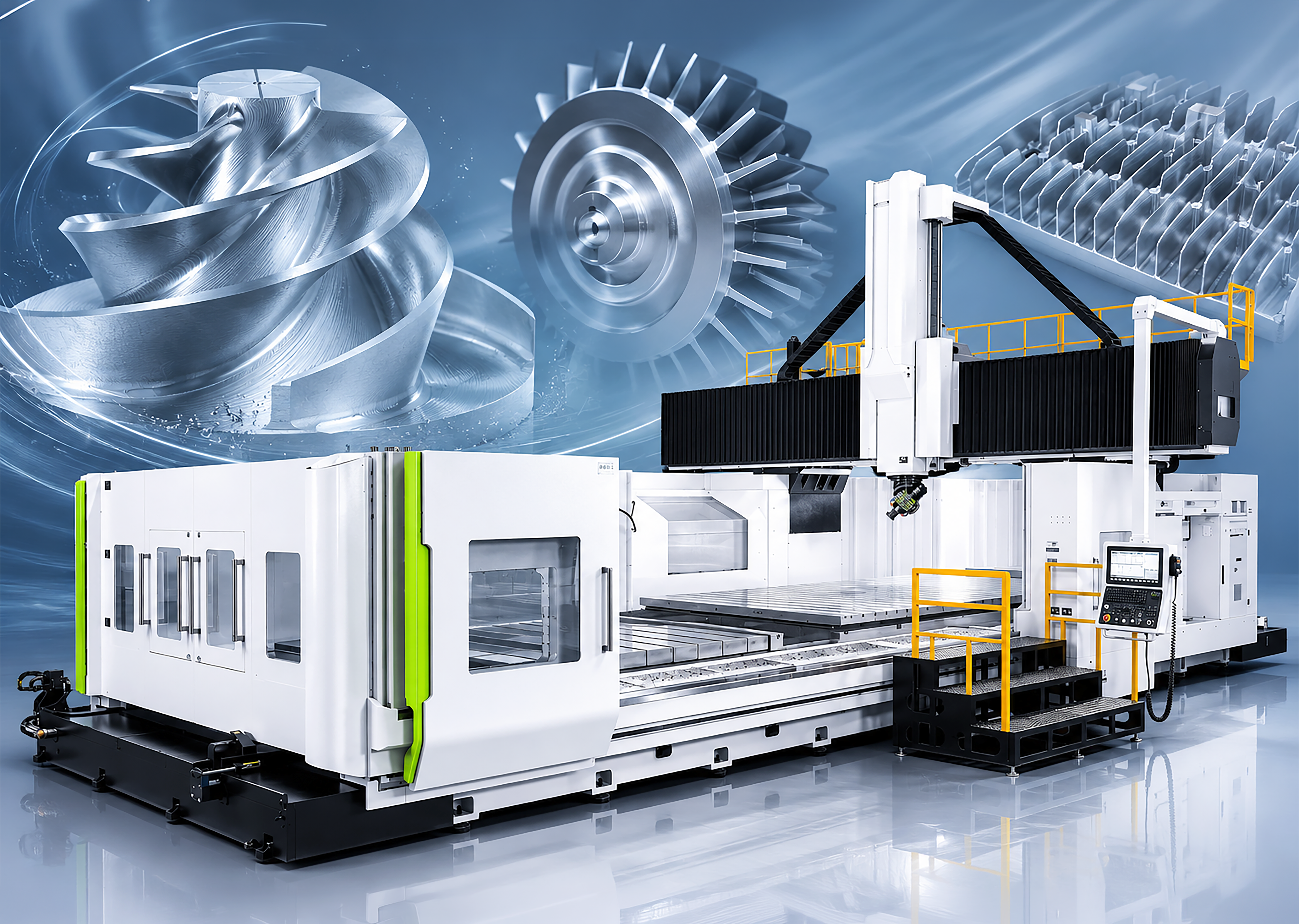
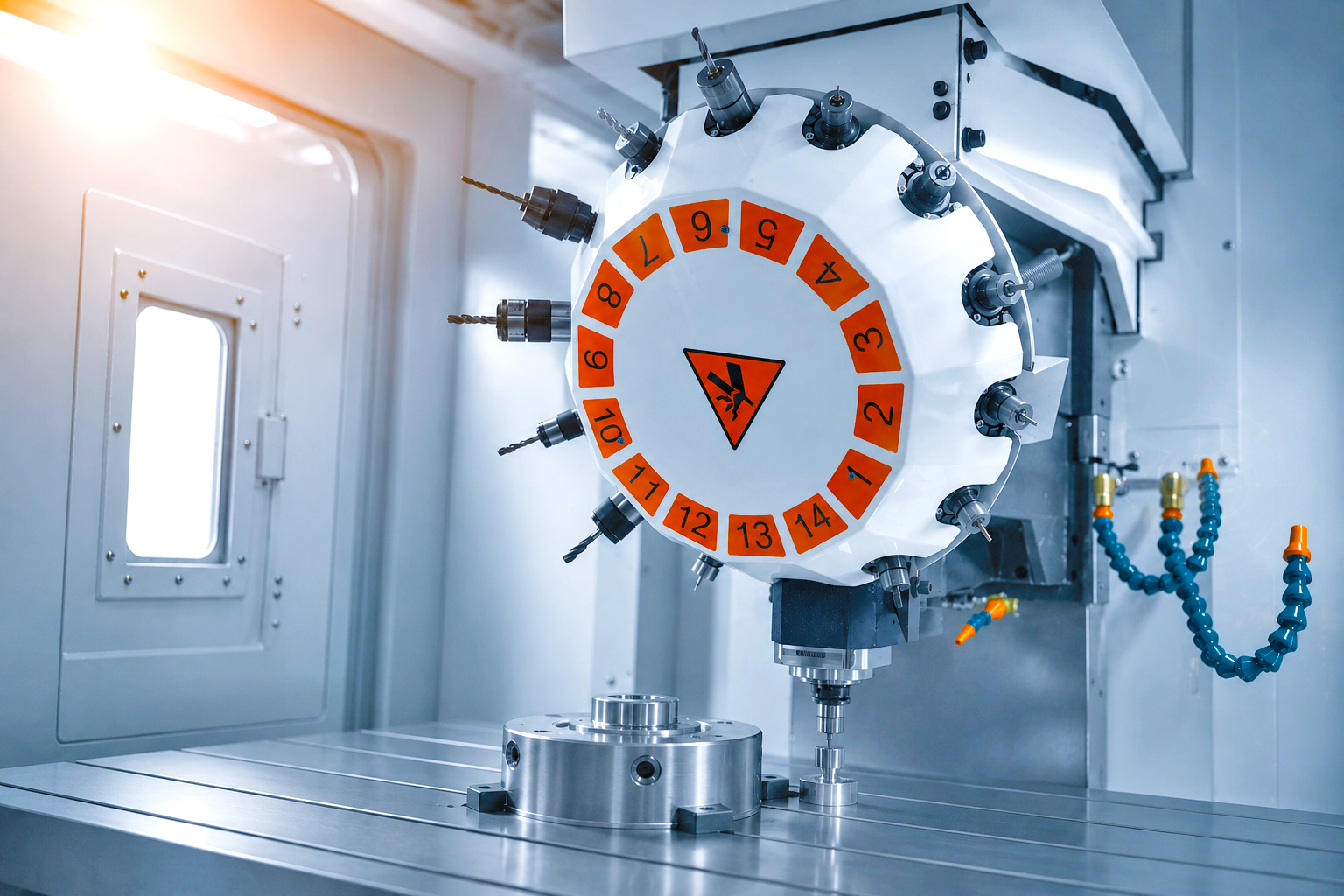
TCP plays a vital role by providing real-time compensation, ensuring stable tool positioning even during high-speed motion. This enables 5-axis machining centers to maintain precision and consistency under high-efficiency conditions, achieving the balance between productivity and quality required in mass production.

What is Tool Center Point (TCP)? How Does It Enable Micron-Level Accuracy in 5-Axis Machining?

For high-precision 5-axis machining centers and advanced CNC machining centers, TCP is not just an optional feature—it is a core capability for ensuring machining quality and consistency.


Tool Center Point (TCP) control is a real-time compensation technology that ensures the tool’s actual cutting point remains at the correct position throughout the entire 5-axis machining process.


In 5-axis machining, the tool orientation continuously changes as the rotary axes (A, B, or C axis) move. Without TCP:


  • The tool tip position deviates
  • Manual recalculation of tool length offsets is required
  • Machining accuracy becomes difficult to maintain consistently


With TCP, the controller automatically performs real-time compensation, including:


  • Tool length and tool orientation compensation
  • Rotary center error compensation
  • Multi-axis kinematic and geometric correction


As a result, the tool tip remains on the intended machining path at all times—no matter how the tool rotates—ensuring stable, high-precision machining at the micron level.

test

How Can a 5-Axis Machining Center Achieve Sub-10 µm Accuracy with TCP?

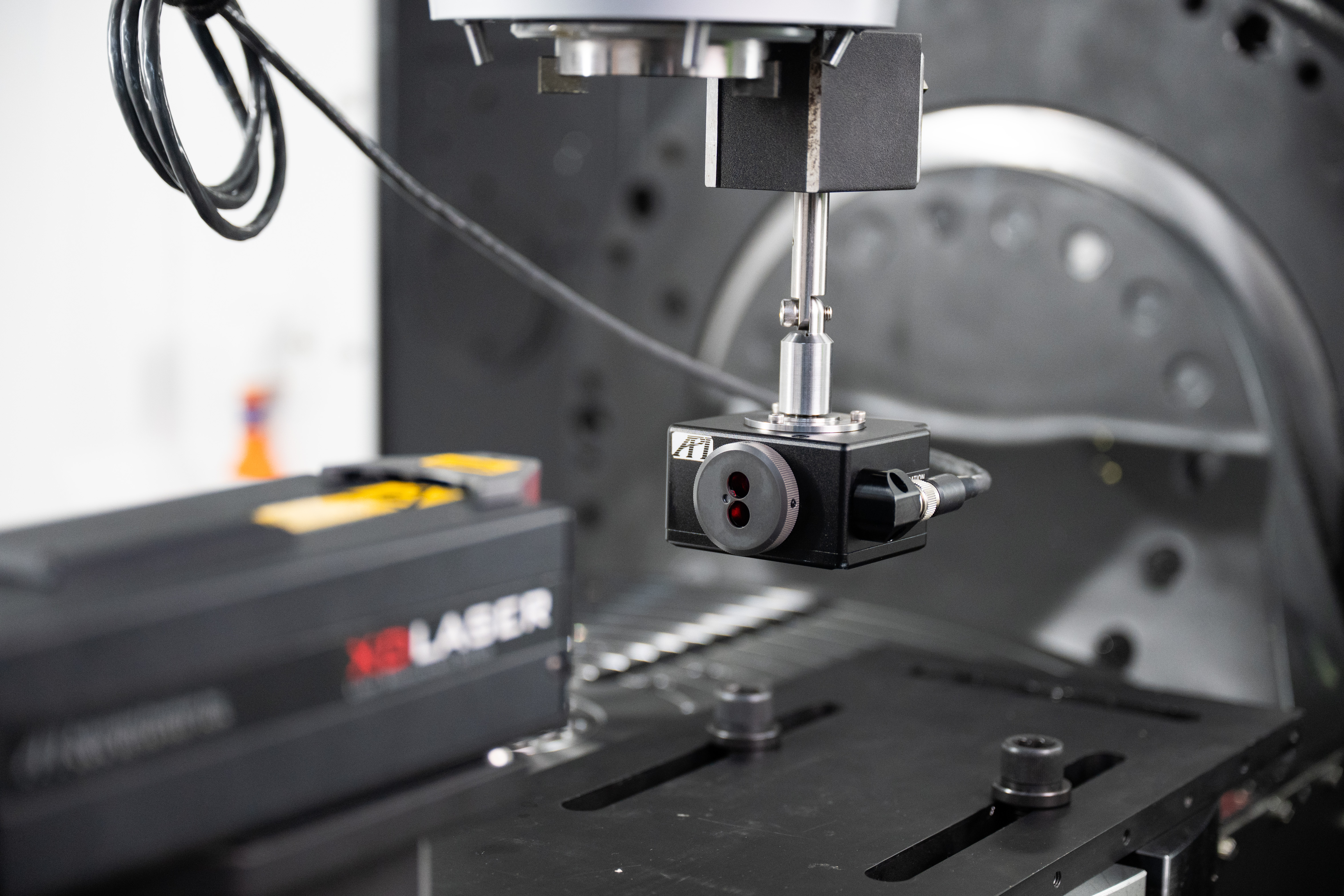
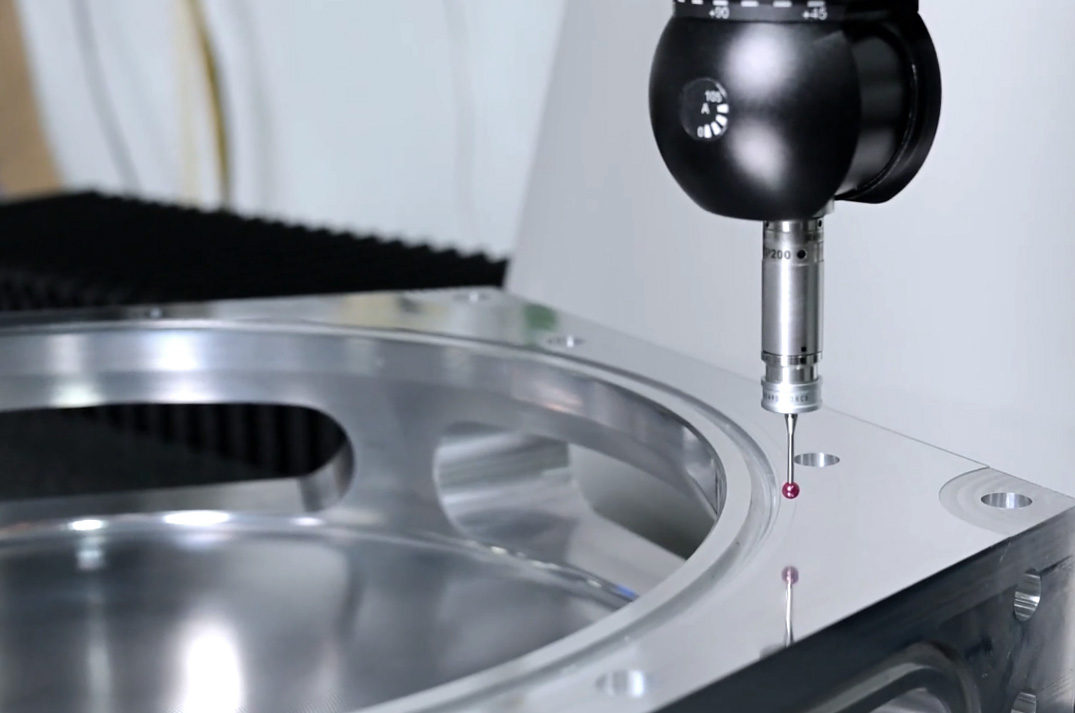
In practical applications, the effectiveness of Tool Center Point (TCP) control can be verified through real machining tests. Taking the Hartford 5-axis machining center 5A-65E as an example, during aluminum alloy machining tests commonly used in semiconductor applications, the integration of TCP with volumetric accuracy compensation enables machining errors to be consistently controlled within 10 µm.


This level of performance represents more than just one-time accuracy—it demonstrates the ability to maintain stable spatial precision under continuous multi-axis motion and long-duration machining conditions.


Such results rely not only on TCP itself, but also on the integration of multiple core technologies, including high-rigidity machine structure, precise rotary axis control, and thermal deformation compensation.


This highlights an important point: TCP is not a standalone feature, but a reflection of the overall technological capability of an advanced CNC machine tool system.

Conclusion: Tool Center Point (TCP) Control as an Essential Foundation of Advanced Manufacturing

From aerospace to semiconductor and electric vehicle component machining, these industries rely heavily on TCP because precision requirements have exceeded the inherent limits of mechanical structures. Real-time compensation is therefore essential to ensure machining quality.


TCP enables 5-axis machining centers to maintain accurate tool tip positioning even during complex multi-axis movements, transforming machining from merely “feasible” to “stable and production-ready.”


For modern CNC machine tools, TCP is no longer an optional feature—it is a fundamental requirement for achieving true high-precision machining.

Other News
news

What Is Micro-Stability Concept?

Why High-Precision CNC Machining Can No Longer Rely on Single-Axis Accuracy Alone?

04.072026
MORE

TMTS 2026 Successfully Concludes

Thank You to Our Global Customers, Partners, and Academic Visitors for Visiting Hartford

03.312026
MORE

Vietnamese Delegation and Indian Buyer Visit Hartford Factory During TMTS

A Closer Look at CNC Machining Applications, Smart Manufacturing, and Equipment Utilization Management

03.272026
MORE

Hartford Highlights Semiconductor and Micro-Machining at TMTS 2026

Thanks to major media for their coverage.(Economic Daily News, Commercial Times, China Times News, Yahoo News)

03.252026
MORE

How to Solve Chip Wrapping in Drilling?

Hartford Chip-Breaking Technology Delivers High Cost-Performance CNC Machining

03.232026
MORE

Solving Dust Issues in Graphite and Mining with CNC Machines ?

03.202026
MORE

5-Axis CNC Machining for Semiconductor Vacuum Chambers

Hartford 5A-65E Micron-Level Precision Test

03.092026
MORE

TMTS 2026 Pre-Show Highlights

Smart Manufacturing × Sustainable Transformation

03.022026
MORE

A Strong Start to the Year of the Horse

2026 Hartford New Year Opening Highlights

02.232026
MORE

Clarification on Unauthorized Activities in the Russian Market

02.032026
MORE

Horizontal Boring Mill PBM-135C has completed inspection and shipment【UK】

Hartford’s Precision Machining Capability Earns International Recognition

01.092026
MORE

Power Dad’s On-Site Visit Highlights

Hartford Gantry Machining Centers Showcase the Strength of Taiwan Manufacturing

12.232025
MORE

Hartford Resolves Czech Machining Challenges

Cross-Border Support Success

12.092025
MORE

Swedish Customer Visits Hartford

Deepening Technical Exchange and Market Understanding

12.042025
MORE

Qing Hong Machinery Tests MVP-13

Performance Highly Approved

12.032025
MORE

Hartford Happy Buddies

Hartford's exclusive Q-style daily stickers are here!Let the Hartford little buddies brighten your mood and accompany you through every challenging day!

12.022025
MORE

Strengthening ties through Kamatsu KGK’s visit

11.202025
MORE

2026 Taiwan Excellence Award Winner — Driving Taiwan’s Smart Manufacturing

The AERO-841G Gantry-Type 5-Axis Machining Center has been honored with the 2026 Taiwan Excellence Award, setting a new benchmark in precision machining with its AI-powered smart manufacturing capabilities.

11.042025
MORE

MOEA Officials Visit Hartford to Discuss Industry Outlook

We appreciate Mr. Chen Hsin-Fa and Ms. Shih Yu-Hsia from the Ministry of Economic Affairs for visiting Hartford with their team and sharing valuable insights.

10.282025
MORE

Hartford Industrial Holds Fire Safety Seminar

10.232025
MORE