What Is Volumetric Accuracy Compensation? Why High-Precision CNC Machining Can No Longer Rely on Single-Axis Accuracy Alone

Logout?

Log Out

Are you sure to log out ?

BACK Return
OKLog Out Confirmed

04.07

2026

What Is Micro-Stability Concept?
Why High-Precision CNC Machining Can No Longer Rely on Single-Axis Accuracy Alone?
test

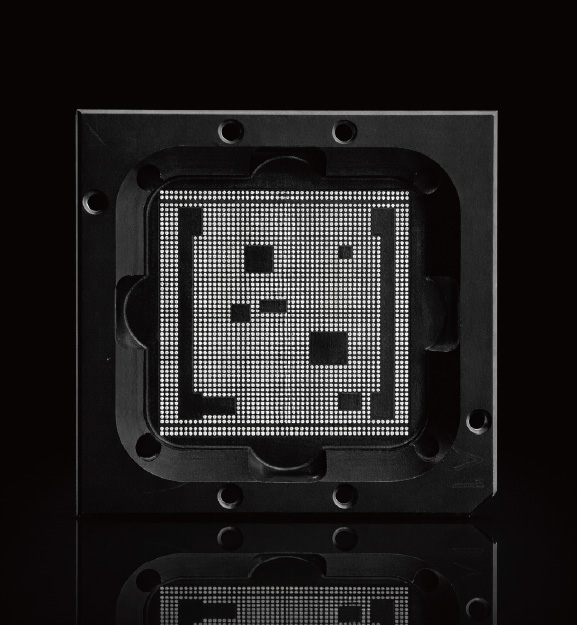
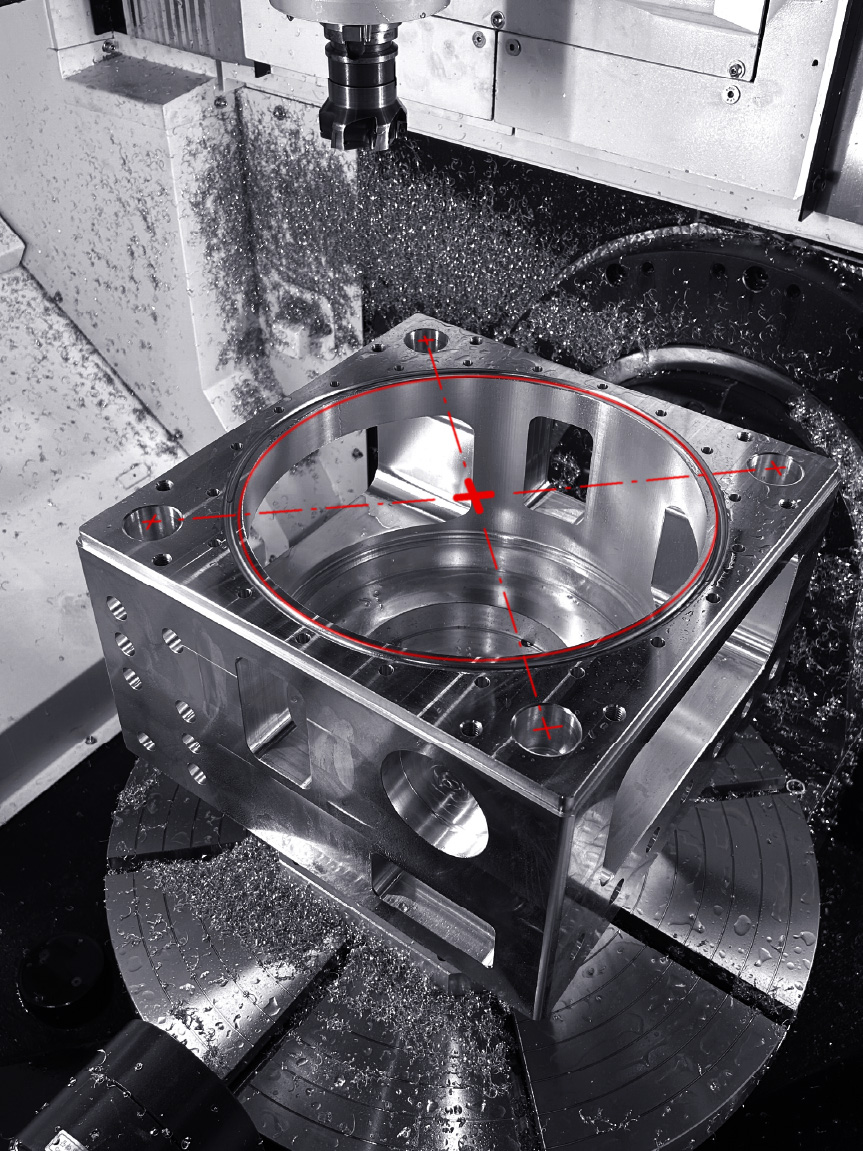
Semiconductor Vacuum Chamber Machining with Micro-Stability Concept

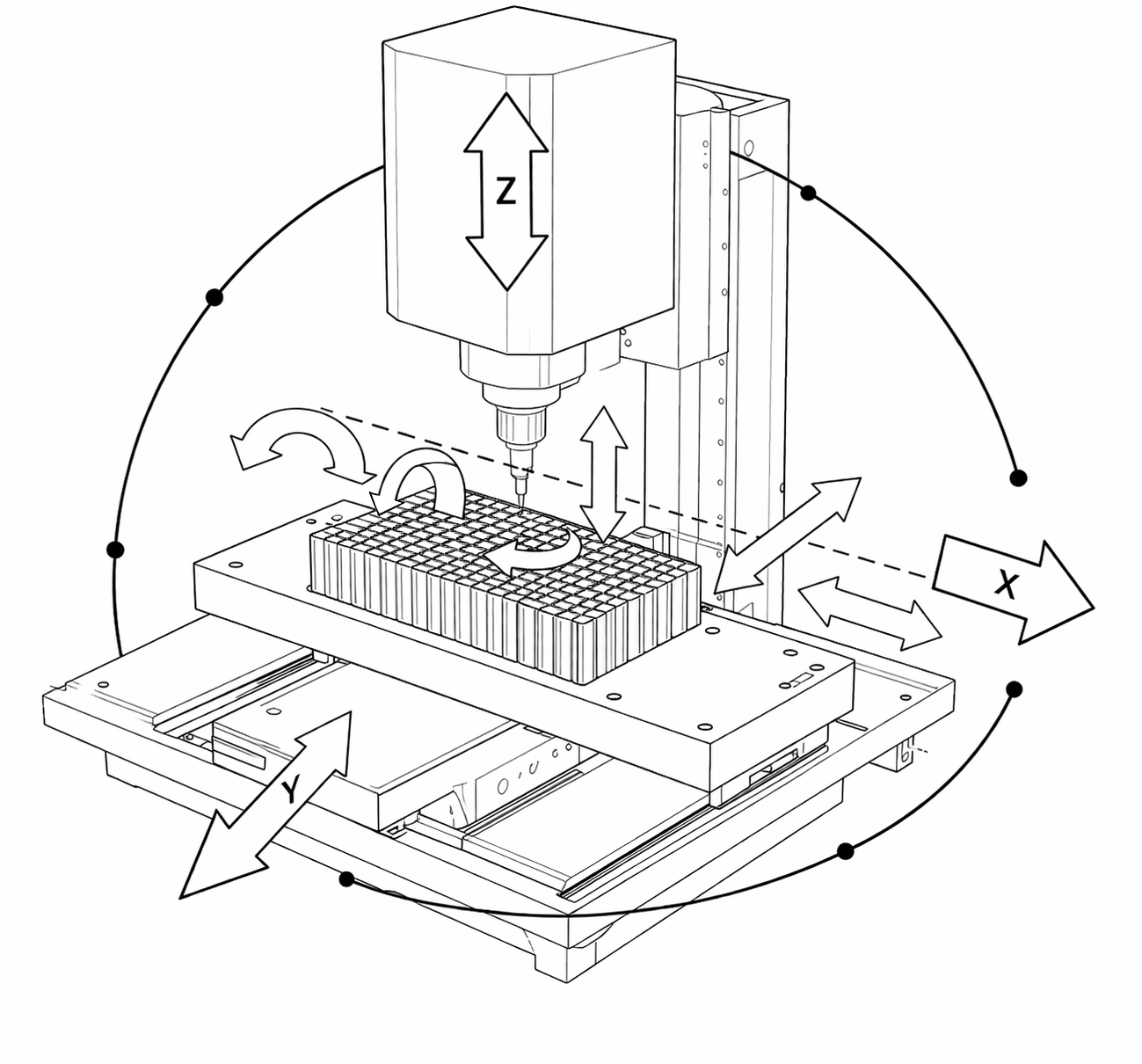
In CNC machining, machine accuracy is often discussed in terms of positioning accuracy or repeatability. While these specifications are important, they do not fully represent how a machine performs in real cutting conditions. In actual machining, the tool does not simply move along one axis at a time. It travels through three-dimensional space, and the final machining result depends on whether the tool tip can maintain consistent geometric accuracy throughout the entire working envelope.


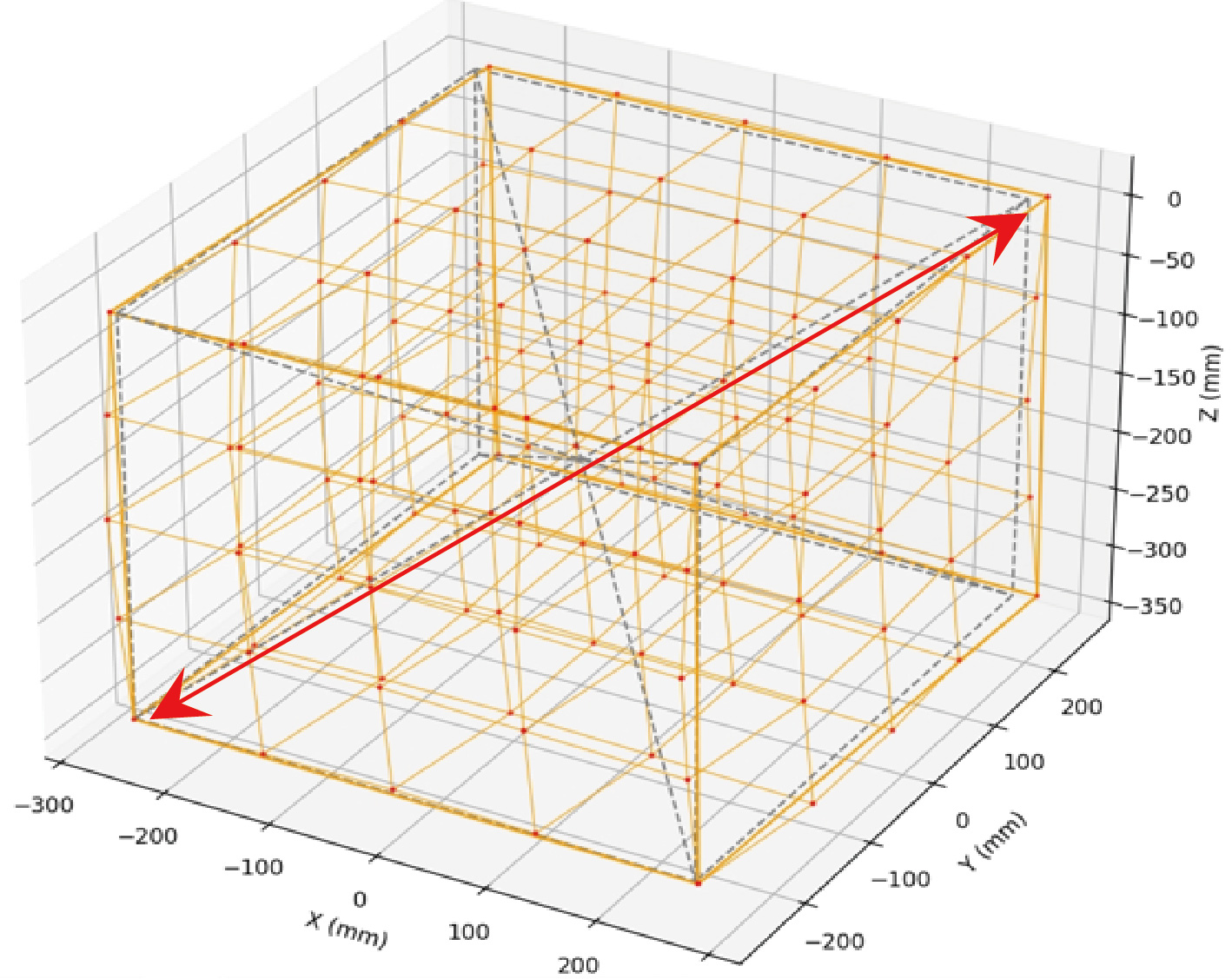
This is why volumetric accuracy compensation, also referred to as spatial accuracy compensation, has become increasingly important in advanced CNC Machine Tool development. Instead of correcting only a single-axis deviation, this technology addresses the accumulated geometric errors that exist throughout the machine’s full machining volume. The goal is to ensure that the tool maintains better positional and geometric consistency at different locations, heights, and motion paths inside the machine.


For industries such as semiconductor machining, die and mold manufacturing, aerospace components, and other high-tolerance applications, this capability is becoming far more important than simply having good static specifications on paper.
test

Why the Accuracy of a 3-Axis Machine Is More Complex Than It Looks

A 3-axis machining center may appear to move only along the X, Y, and Z linear axes, but the factors that affect machining accuracy go far beyond simple positional deviation. In reality, machine tool errors are mainly divided into single-axis geometric errors and inter-axis squareness errors, with a total of 21 error components that significantly influence machining precision.


For each linear axis, movement does not involve only ideal straight-line positioning. During travel, it may also generate deviations such as linear positioning error, horizontal straightness error, vertical straightness error, as well as Pitch, Yaw, and Roll angular errors. These six motion-related deviations occur on each of the X, Y, and Z axes, forming a total of 18 geometric error components. When combined with the squareness errors between the three axes, they ultimately affect the actual position of the tool center point (TCP).


That is why, in high-precision machining, evaluating only single-axis positioning accuracy is often not enough to reflect the true machining performance of the machine.


21 Degrees of Freedom Errors in a 3-Axis Machine:

  1. Linear Positioning Error
  2. Horizontal Straightness Error
  3. Vertical Straightness Error
  4. Pitch Error
  5. Yaw Error
  6. Roll Error
  7. Squareness Error

test

Diagonal Error Compensation

Why Diagonal Error Matters More Than Many People Realize

Among the different methods used to evaluate machine accuracy, diagonal error testing is especially meaningful because it reflects the machine’s behavior in simultaneous multi-axis motion rather than simple single-axis travel.


When the machine moves diagonally through space, multiple axes are interpolating at the same time. This makes diagonal error one of the most representative indicators of true volumetric performance.


Based on the measured results provided, the diagonal error over a 1-meter space was reduced from 0.044 mm before compensation to 0.010 mm after compensation, representing an overall improvement of approximately 77%.


This is not just a numerical improvement. It directly affects the dimensional and geometric stability of actual parts. In practical machining, excessive diagonal error can contribute to hole position deviation, accumulated dimensional offset, misalignment in assembly, and reduced consistency across larger workpieces.


When a machine can reduce this type of error over a 1-meter working range, it suggests that the machine is not only accurate at one local point, but also more geometrically stable throughout its full machining space.

test

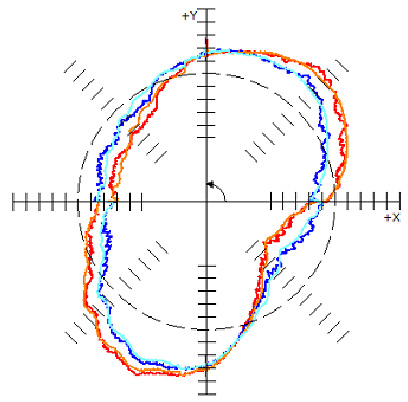
Roundness was 7.3 μm before compensation

test

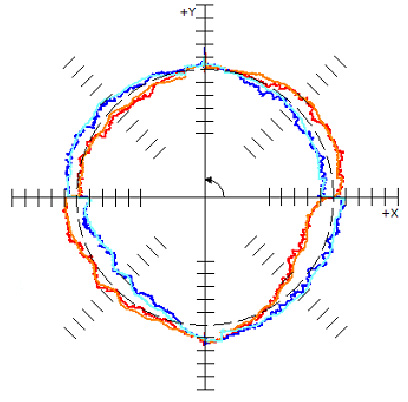
Roundness was 4.1 μm after compensation

What DBB Circularity Verification Reveals About Real Machining Performance

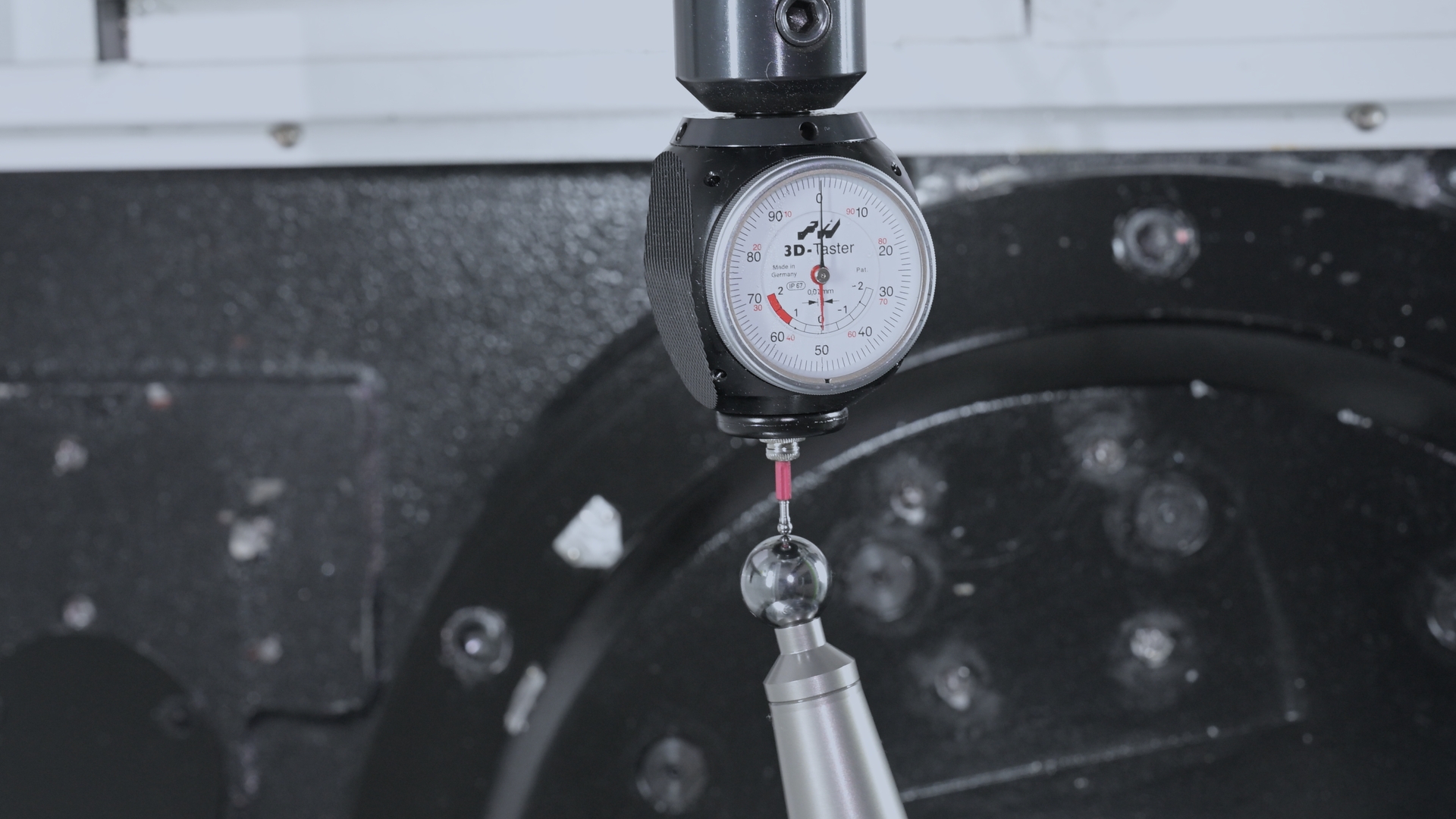
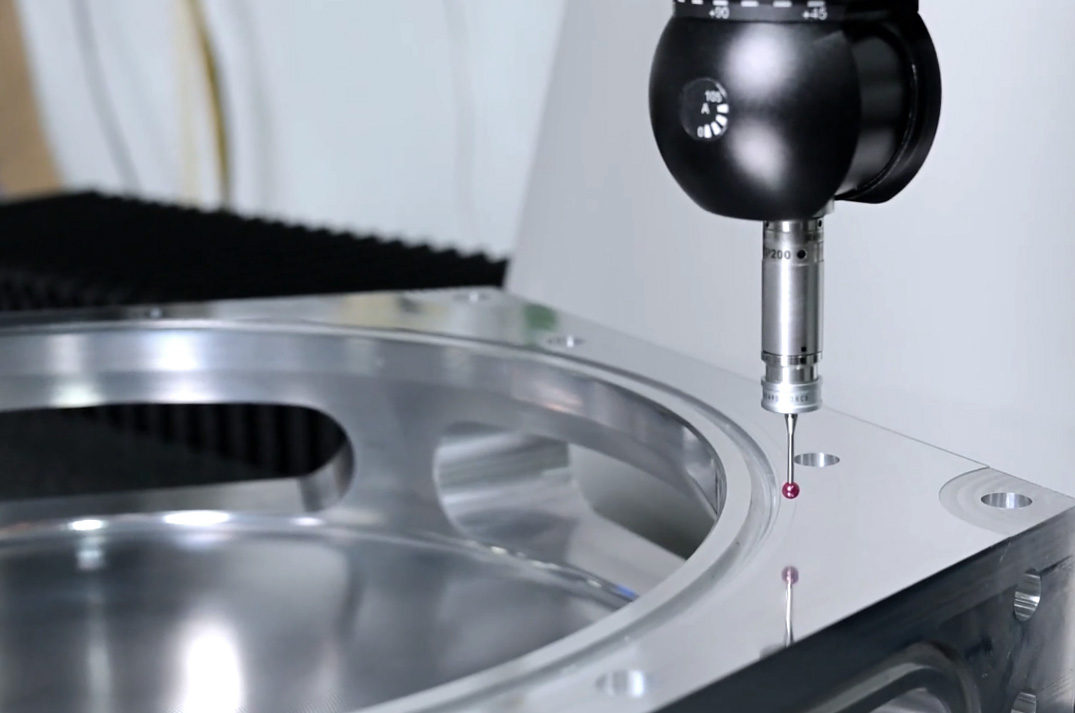
If diagonal error shows how a machine behaves across space, then DBB (Double Ball Bar) testing shows how it behaves during interpolated motion that more closely resembles actual machining.


Many real machining operations—such as circular pockets, bores, arcs, and contour paths—depend on coordinated multi-axis motion rather than straight-line travel. If geometric errors, axis squareness issues, or motion-related deviations exist, they will often appear as poor circularity, unstable contour accuracy, or inconsistent geometry.


Under the condition of XY plane motion with a 150 mm tool length, the circularity result improved from 7.3 μm before compensation to 4.1 μm after compensation, which corresponds to an improvement of approximately 43%.

At the same time, perpendicularity error improved from -6.0 μm to 0.4 μm, showing an improvement of about 93%.


These values are meaningful because longer tool projection amplifies the effect of geometric deviation at the cutting point. This makes the test more representative of actual machining conditions, especially for deep cavity machining, high-feature parts, or applications where tool length cannot be kept short.


The fact that both circularity and perpendicularity improved at the same time suggests that the compensation effect is not limited to one isolated factor. It improves the overall geometric behavior of the machine during real motion.

test

Boring Machining Validation

Boring Accuracy Verification: Compensation Improves Actual Part Results, Not Just Measurement Charts

For most users, charts and diagrams alone are never enough. The real value of any compensation technology is whether it can improve the finished part.


In the boring accuracy verification, the diagonal dimensional error between D1 and D3 was reduced from 2.828 μm before compensation to 1.626 μm after compensation, representing an improvement of about 42%.


This result shows that volumetric accuracy compensation does not simply improve abstract geometric data. It directly affects actual hole position and dimensional relationships on the workpiece.


For components that rely on high hole position accuracy—such as semiconductor components, precision fixtures, mold parts, and high-accuracy assemblies—this difference can have a direct impact on assembly quality, sealing performance, and overall functional reliability.

Why This Matters More for Semiconductor, Mold, and High-Precision Components

test

test

test

test

Volumetric accuracy compensation is becoming more important not because it sounds advanced, but because it addresses exactly the kinds of machining problems that high-precision industries struggle with.


In semiconductor machining, for example, vacuum chambers, sealing faces, precision bores, and high-flatness components often require not just accurate dimensions at a single point, but stable geometric relationships across the entire part.


In die and mold applications, volumetric error can affect cavity geometry, contour consistency, hole alignment, and overall assembly accuracy. Many machining issues that are often blamed on tooling or programming are, in reality, closely related to machine geometric behavior.


The same is true for precision mechanical parts, aerospace structures, and advanced fixtures. These applications often involve larger parts, multi-face machining, and long-distance feature relationships. In such cases, single-axis accuracy alone is no longer enough to explain or guarantee actual machining quality.


Whether the machine is a 5 Axis Machining Center or a high-precision 3-axis platform, the importance of volumetric consistency continues to grow as part complexity and tolerance demands increase.

test

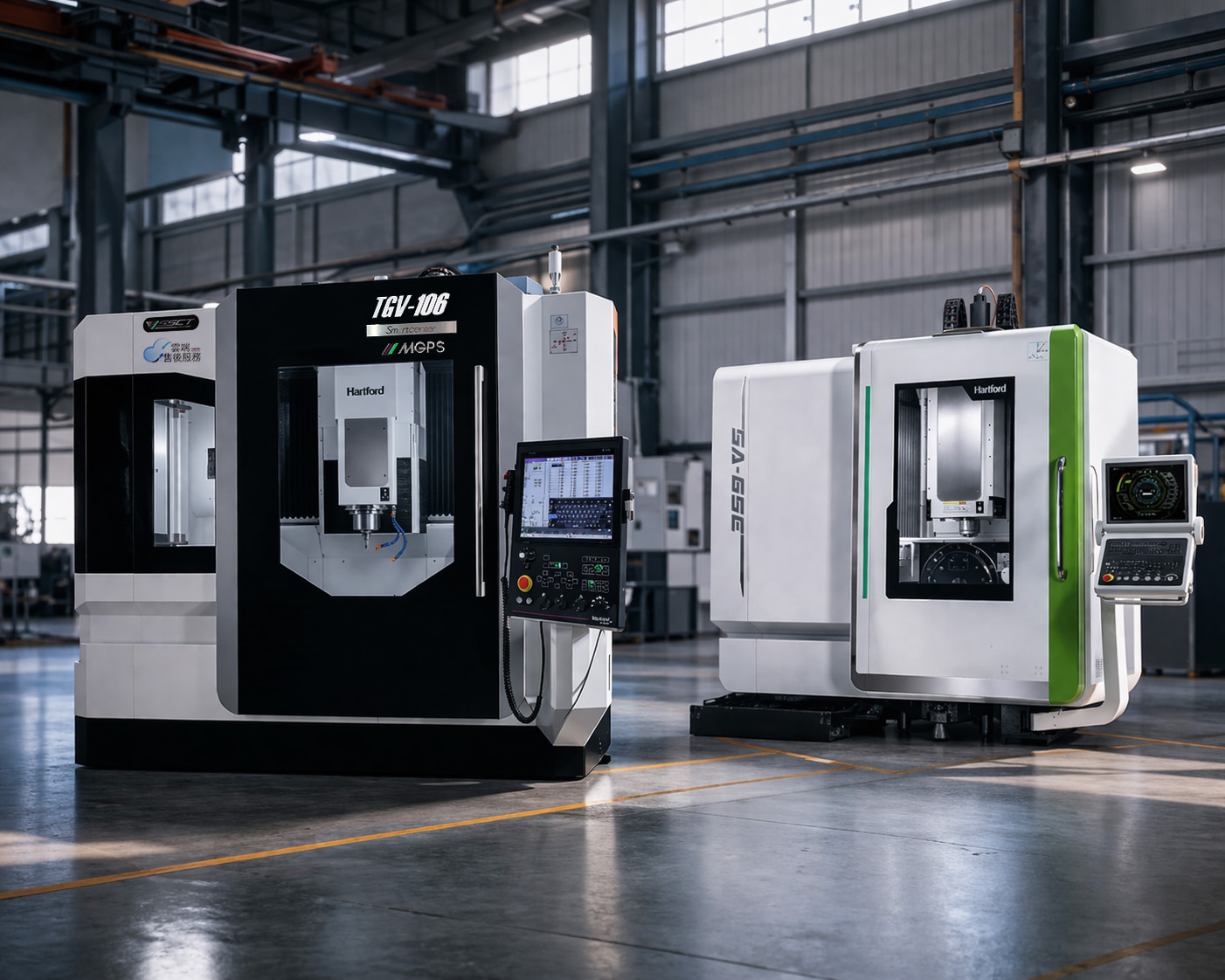
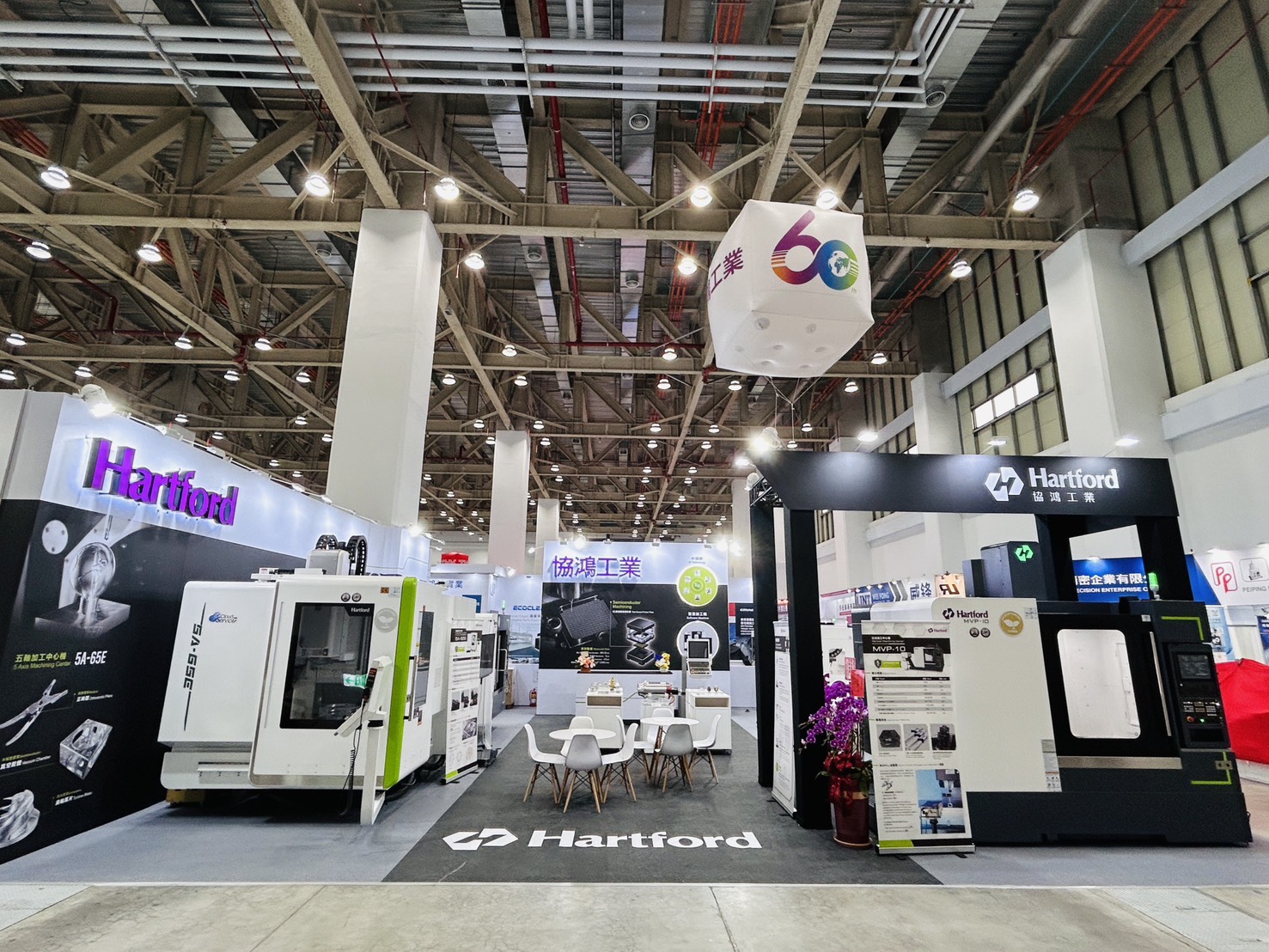
Hartford 5-axis machining center 5A-65E (right),high-speed machining center TGV-106 (left)

Real Value in Precision Machining Comes From Stability, Not Just One Good Test Result

Precision is never just about achieving one impressive test result — it is about maintaining long-term stability.


For real-world users, what truly matters is not whether one measurement looks exceptionally good on a specific occasion, but whether the same workpiece can maintain consistent quality across different batches, different positions, and different tool conditions.


This is exactly where the value of volumetric accuracy compensation lies. Its purpose is not simply to make the machine more accurate under one specific condition, but to improve the overall geometric consistency throughout the machining space. As a result, it helps deliver more stable machining results, reduce rework risk, improve first-pass success rates, and lessen dependence on operator experience and repeated manual compensation.


In high-precision machining, this kind of capability is often far more valuable than simply chasing an extreme number on paper.

For the Hartford 5-axis machining center 5A-65E, this function is especially beneficial in applications involving multi-face machining, complex surfaces, and high-precision hole positioning, where stable volumetric accuracy is critical. Meanwhile, for the high-speed machining center TGV-106, it is particularly well suited for high-speed, high-precision, and long-duration continuous machining, ensuring the machine is not only accurate, but also consistently reliable in real production environments.

When machining accuracy enters the volumetric domain, compensation technology is no longer an added advantage — it becomes a necessity

As machining requirements continue to move toward semiconductor components, precision molds, micro-features, and tighter geometric tolerances, machine accuracy can no longer be understood only in terms of single-axis movement. What matters increasingly is whether the entire machining space can remain geometrically stable and consistent.


The test results discussed here make that point clear. A diagonal error reduced from 0.044 mm to 0.010 mm, DBB circularity improved from 7.3 μm to 4.1 μm, and boring accuracy improved from 2.828 μm to 1.626 μm all point to the same conclusion: in high-precision machining, the real challenge is not only axis movement, but geometric consistency throughout the full working volume.


For Hartford, the significance of volumetric accuracy compensation is not simply about presenting better specification numbers. It is about making sure that under real machining conditions, the machine can maintain a more stable, measurable, and repeatable level of accuracy across a wider machining range. That is also why this technology has become an increasingly important part of how Hartford approaches precision machine development.

Other News
news

Key Technologies in Aerospace, Semiconductor, and EV Machining

An In-Depth Look at the Importance of Tool Center Point (TCP) in 5-Axis Machining

04.132026
MORE

TMTS 2026 Successfully Concludes

Thank You to Our Global Customers, Partners, and Academic Visitors for Visiting Hartford

03.312026
MORE

Vietnamese Delegation and Indian Buyer Visit Hartford Factory During TMTS

A Closer Look at CNC Machining Applications, Smart Manufacturing, and Equipment Utilization Management

03.272026
MORE

Hartford Highlights Semiconductor and Micro-Machining at TMTS 2026

Thanks to major media for their coverage.(Economic Daily News, Commercial Times, China Times News, Yahoo News)

03.252026
MORE

How to Solve Chip Wrapping in Drilling?

Hartford Chip-Breaking Technology Delivers High Cost-Performance CNC Machining

03.232026
MORE

Solving Dust Issues in Graphite and Mining with CNC Machines ?

03.202026
MORE

5-Axis CNC Machining for Semiconductor Vacuum Chambers

Hartford 5A-65E Micron-Level Precision Test

03.092026
MORE

TMTS 2026 Pre-Show Highlights

Smart Manufacturing × Sustainable Transformation

03.022026
MORE

A Strong Start to the Year of the Horse

2026 Hartford New Year Opening Highlights

02.232026
MORE

Clarification on Unauthorized Activities in the Russian Market

02.032026
MORE

Horizontal Boring Mill PBM-135C has completed inspection and shipment【UK】

Hartford’s Precision Machining Capability Earns International Recognition

01.092026
MORE

Power Dad’s On-Site Visit Highlights

Hartford Gantry Machining Centers Showcase the Strength of Taiwan Manufacturing

12.232025
MORE

Hartford Resolves Czech Machining Challenges

Cross-Border Support Success

12.092025
MORE

Swedish Customer Visits Hartford

Deepening Technical Exchange and Market Understanding

12.042025
MORE

Qing Hong Machinery Tests MVP-13

Performance Highly Approved

12.032025
MORE

Hartford Happy Buddies

Hartford's exclusive Q-style daily stickers are here!Let the Hartford little buddies brighten your mood and accompany you through every challenging day!

12.022025
MORE

Strengthening ties through Kamatsu KGK’s visit

11.202025
MORE

2026 Taiwan Excellence Award Winner — Driving Taiwan’s Smart Manufacturing

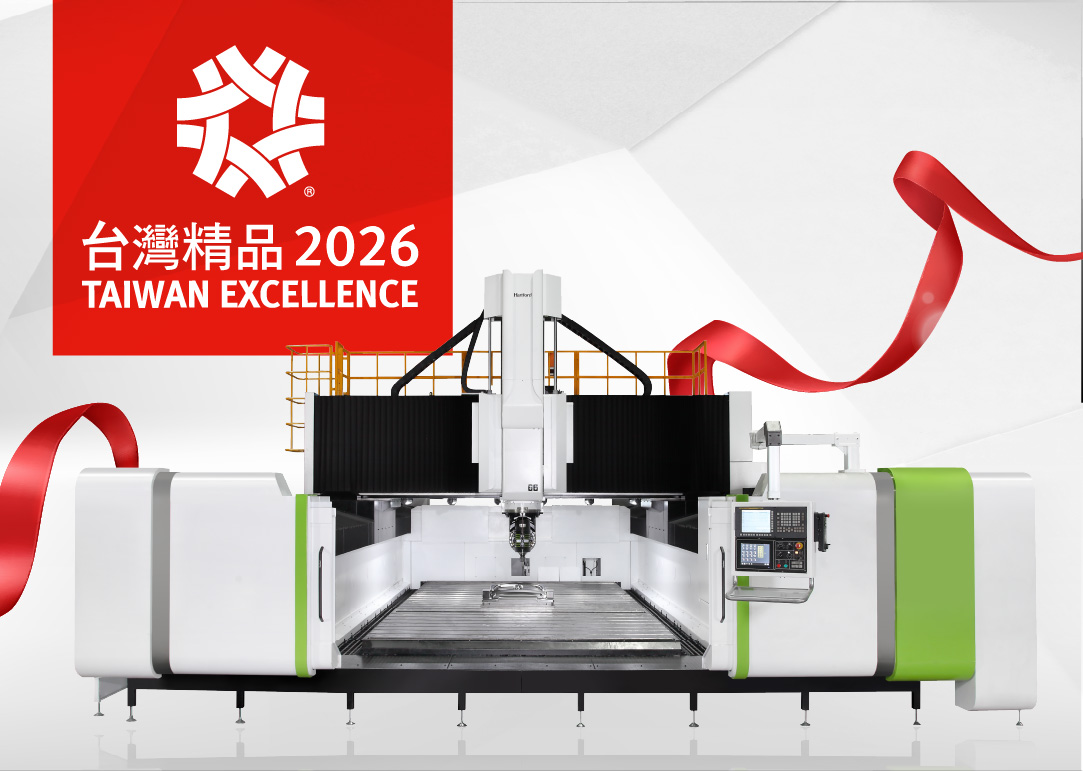
The AERO-841G Gantry-Type 5-Axis Machining Center has been honored with the 2026 Taiwan Excellence Award, setting a new benchmark in precision machining with its AI-powered smart manufacturing capabilities.

11.042025
MORE

MOEA Officials Visit Hartford to Discuss Industry Outlook

We appreciate Mr. Chen Hsin-Fa and Ms. Shih Yu-Hsia from the Ministry of Economic Affairs for visiting Hartford with their team and sharing valuable insights.

10.282025
MORE

Hartford Industrial Holds Fire Safety Seminar

10.232025
MORE