As Precision Becomes the Baseline, What Challenges Do Aerospace, Semiconductor, and EV Machining Face?

In advanced manufacturing, machining accuracy is no longer a competitive advantage—it has become a fundamental requirement for product viability. Industries such as aerospace, semiconductor, and electric vehicle (EV) manufacturing represent the highest standards in precision and stability. To meet these demands, 5-axis machining centers are widely adopted for handling complex geometries. However, in real-world applications, challenges arising from multi-axis motion and environmental variations remain significant.
1. Aerospace Machining: Complex Surfaces and High-Value Risks
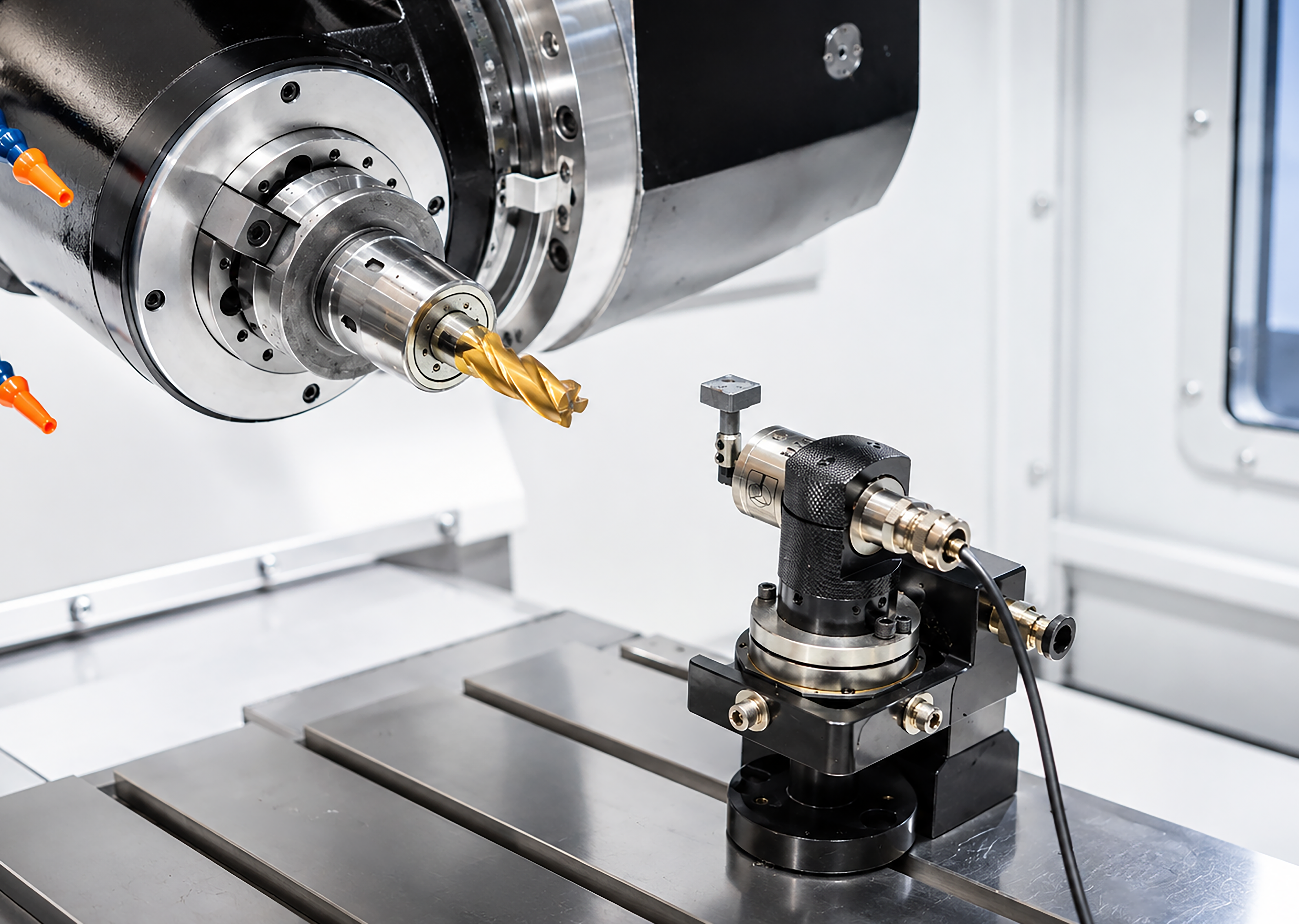
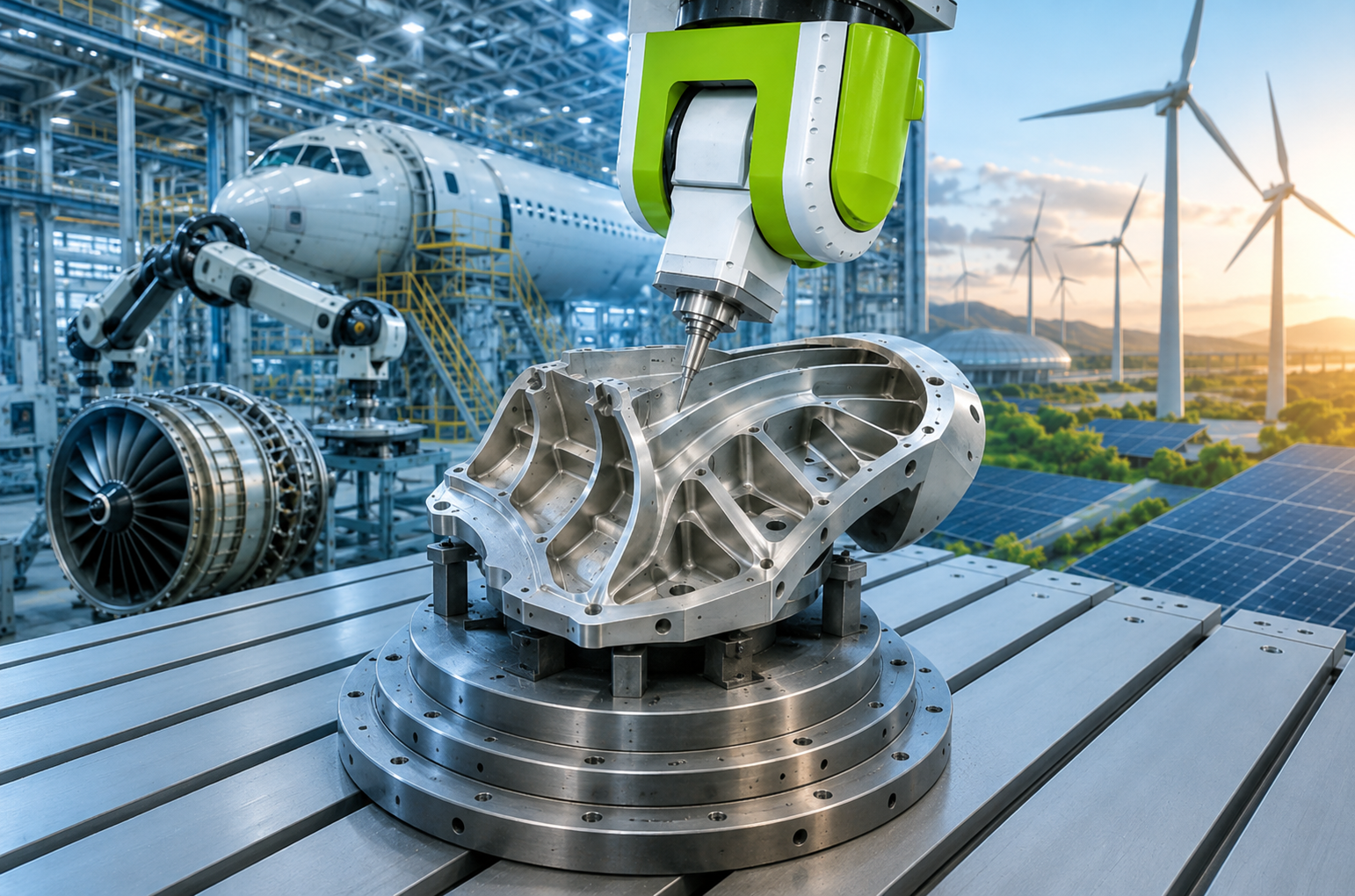
The primary challenge in aerospace machining lies in geometric complexity. Components such as turbine blades and structural parts often feature freeform surfaces that require multi-angle machining. This means the tool orientation must continuously change during the process. When rotary axes are in constant motion, deviations in tool tip position can occur due to machine geometry errors and tool length variations, leading to reduced contour accuracy.
Material characteristics further complicate the process. Aerospace components are typically made from titanium alloys or other high-strength materials, which are prone to thermal deformation and fluctuating cutting loads—factors that amplify machining errors. Additionally, the high value of aerospace parts means that failure is extremely costly, making “first-pass success” and long-term stability essential.
2. Semiconductor Machining: Micron-Level Precision and Assembly Accuracy
In the semiconductor industry, machining challenges stem from extreme precision requirements and high consistency demands. Components such as vacuum chambers and precision structures often require multi-face machining, where the relative position between surfaces must be tightly controlled. Even micron-level deviations can lead to sealing failures or degraded equipment performance.
In practice, the main issue is not single-dimensional error, but spatial geometric deviation. As the tool moves across different angles, any lack of compensation results in slight tool tip displacement. These small deviations accumulate across multiple surfaces, ultimately causing assembly misalignment.
Furthermore, semiconductor equipment typically operates continuously over long periods, requiring components to deliver consistent and repeatable performance. Any variation between batches can directly affect system efficiency and yield.
3. EV Machining: The Trade-Off Between High Speed and Precision
In EV manufacturing, the key challenge lies in balancing efficiency and accuracy. Components such as battery housings, motor casings, and lightweight structural parts require multi-face machining combined with high production throughput. This often necessitates high-speed machining conditions.
However, high-speed operations introduce thermal deformation, vibration, and dynamic errors, all of which can destabilize the tool tip position. This leads to dimensional variation and assembly inconsistencies. As production volume increases, even minor deviations can significantly impact yield and overall cost.
Consistency is another critical factor. EV components are typically produced in large quantities, and unstable machining accuracy can result in substantial rework or scrap rates, directly affecting profitability.