Latest News | Hartford CNC Machine Tool Events, Products and Industry Updates

Logout?

Log Out

Are you sure to log out ?

BACK Return
OKLog Out Confirmed

06.25

2026

How to Prevent Tool Breakage and Workpiece Scrap in 5-Axis Machining?
Entering the era of smart 5-axis manufacturing with TPS tool protection system

New Challenges in Tool Management for the 5-Axis Machining Era

In today's high-precision manufacturing industry, 5-axis machining has become an indispensable technology for producing complex surfaces, aerospace components, precision molds, and medical devices. By simultaneously controlling the X, Y, and Z linear axes along with two additional rotary axes, 5-axis machining enables highly complex multi-surface machining in a single setup. However, as part geometries become increasingly sophisticated, the challenges involved in the machining process continue to grow significantly.


Particularly in high-speed machining (HSM) applications, the contact angle between the cutting tool and the workpiece changes continuously, causing cutting forces to fluctuate constantly. As a result, tool wear mechanisms become far more complex and difficult to predict than in conventional 3-axis machining. When machining high-value materials such as titanium alloys, hardened tool steels, and nickel-based superalloys, unexpected tool breakage or excessive wear can lead to surface quality issues, scrapped workpieces, spindle damage, and significant production losses. Therefore, achieving maximum tool life and automated tool management while maintaining peak machining efficiency has become a critical factor in the transition toward smart manufacturing.


Three Major Challenges of Conventional 5-Axis Machining


1. Unexpected Spindle Load Fluctuations

Because cutting depth and tool engagement angles vary constantly during simultaneous 5-axis machining, sudden spindle load spikes can occur without warning, resulting in accelerated tool wear or unexpected tool breakage.


2. Inefficient Manual Tool Tracking

Traditional tool management often relies on operator experience or manual records of tool usage and machining time. These methods are prone to inaccuracies and cannot effectively respond to the dynamic demands of modern multi-axis machining processes.


3. Shortage of Skilled Operators

Experienced machinists capable of setting up complex 5-axis operations and identifying tool wear through cutting sound and machine behavior are becoming increasingly difficult to recruit and train. This growing skills gap directly impacts production stability, machining quality, and overall manufacturing efficiency.
test

Intelligent Tool Life Management

test

AFC (Adaptive Feed Control)

TPS Smart Tool Protection System

The Key Technology for Maximizing Efficiency and Tool Life

To address these challenges, Hartford developed the TPS (Tool Protection System), an intelligent solution that combines advanced hardware monitoring with smart software algorithms. TPS is seamlessly integrated into the latest Hartrol Premium operating platform and is available for Hartrol Premium 1/2/3 controllers, Ver. A09U6 and later. The system supports Hartford's full range of machining centers, gantry machines, and 5-axis machining centers.


The TPS Formula

TPS = Load Monitor + AFC (Adaptive Feed Control) + Tool Life Management + Automatic Spindle Load Learning


Through the integration of these four core functions, TPS enables machines to automatically adapt, optimize, and protect themselves during operation, allowing even less experienced operators to achieve reliable 24/7 unattended machining.


1. Load Monitor

Building a Proactive Safety Shield Against Tool Failure


During 5-axis machining, the material removal rate (MRR) continuously changes as the tool engages different surface angles. The Load Monitor function tracks spindle current and torque in real time throughout the machining process.


Based on the cutting characteristics of each tool, the system automatically establishes appropriate load protection thresholds, typically including warning and machine-stop levels. When abnormal spindle loads exceed the preset limits, TPS can immediately trigger an alarm or safely stop the machine within milliseconds. This prevents excessive tool stress, unexpected breakage, and premature wear, helping extend the service life of high-value cutting tools.


2. AFC (Adaptive Feed Control)

Dynamically Optimizing Feed Rates for Maximum Productivity


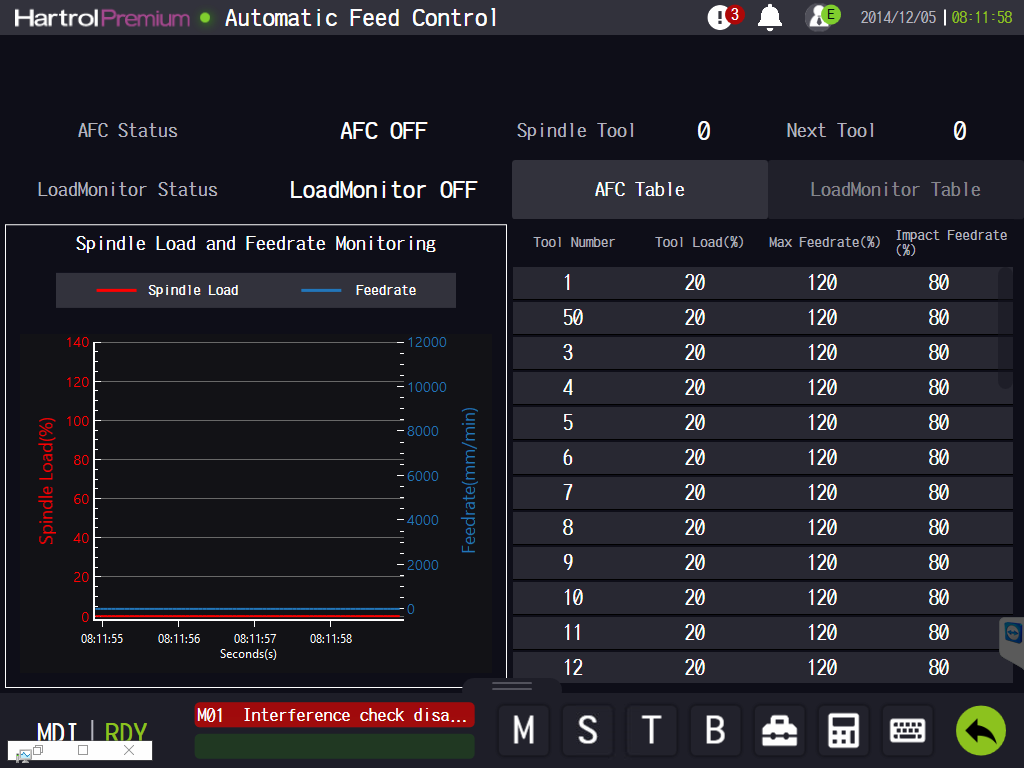
Air cutting and inconsistent cutting engagement are common challenges in 5-axis machining. To avoid overload, conventional machining often relies on conservative feed rate settings, which can significantly reduce productivity.


AFC acts as an intelligent co-pilot for the machining process. When spindle load decreases due to lighter cutting conditions or air cutting, AFC automatically increases the feed rate to reduce cycle time. Conversely, when cutting resistance increases and spindle load rises, AFC automatically reduces the feed rate to maintain stable cutting conditions.


This dynamic adjustment not only helps extend tool life but also maximizes machining efficiency while maintaining safe operating conditions.


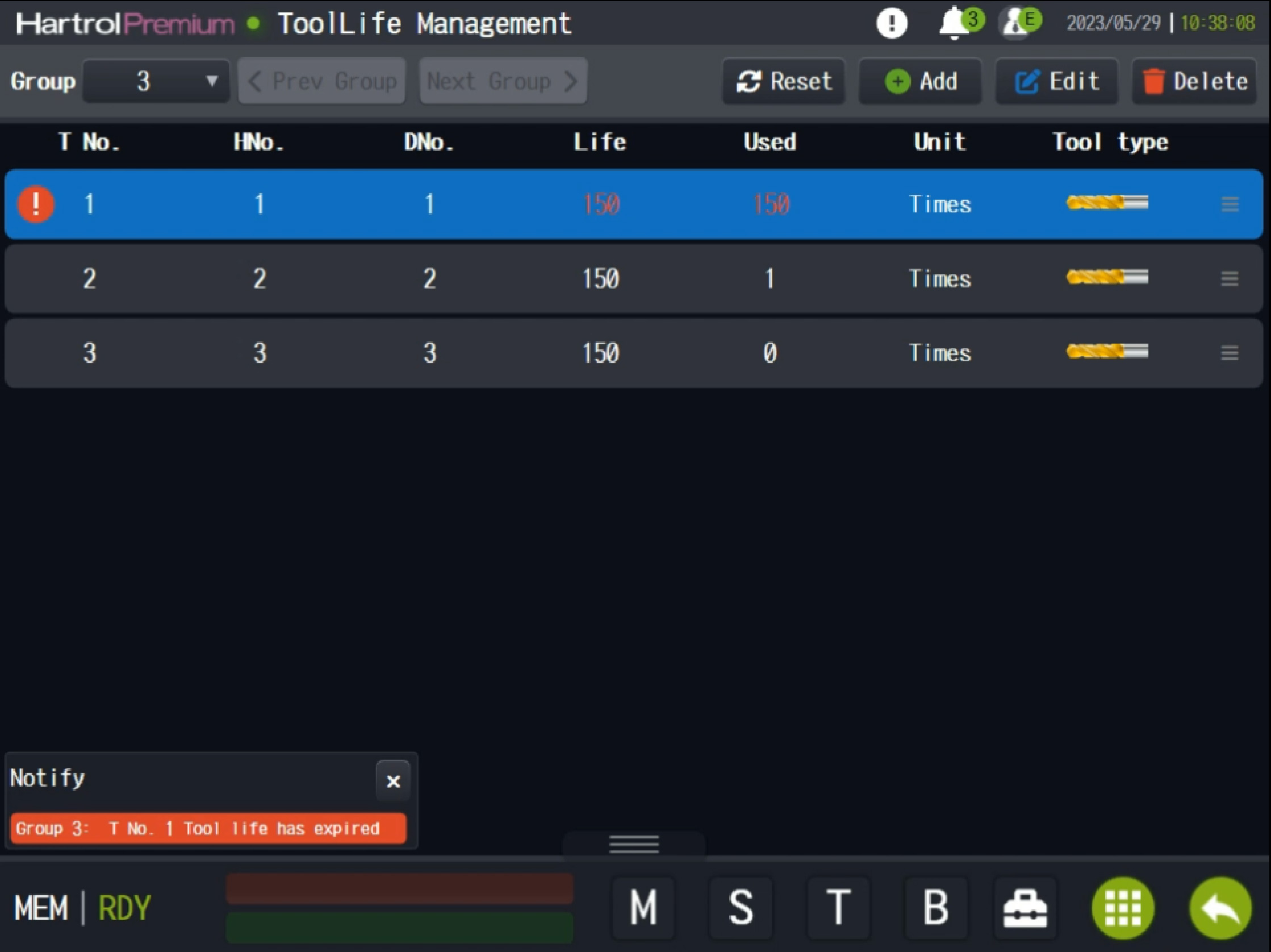
3. Intelligent Tool Life Management

Eliminating Manual Guesswork Through Automated Tool Replacement


Using real-time sensor data, TPS continuously tracks actual cutting time, spindle load conditions, and tool usage information for each tool.


When a tool reaches its predefined replacement criteria, the system can automatically activate a sister tool through the advanced tool management function, eliminating the need for manual intervention. Combined with Hartford's high-speed automatic tool changing system, this feature enables uninterrupted machining and significantly reduces machine downtime.


4. Automatic Spindle Load Learning

AI-Powered Intelligence That Simplifies Setup


Traditionally, configuring spindle load protection parameters requires extensive machining knowledge and process experience.


TPS revolutionizes this process through its Automatic Spindle Load Learning function. During the first prove-out machining cycle, the system automatically records and analyzes spindle load data throughout the entire toolpath. It then generates optimized upper and lower protection thresholds based on actual machining conditions.


Even for complex simultaneous 5-axis machining operations, operators can establish expert-level protection settings with a single click, dramatically reducing setup time and dependence on highly experienced personnel.

test

Practical Benefits of TPS in 5-Axis Machining Applications

When applied to 5-axis machining centers, such as Hartford's 5-axis machine series, the TPS Tool Protection System delivers immediate and measurable improvements in productivity, reliability, and process stability. The following highlights the key performance advantages manufacturers can expect after implementing TPS.


Tool Life Performance

From Inconsistent Wear to More Than 30% Longer Tool Life


In conventional 5-axis machining, constantly changing cutting angles and sudden load fluctuations often cause uneven tool wear and unpredictable tool life. With TPS, the combination of Load Monitor and AFC (Adaptive Feed Control) continuously optimizes machining conditions in real time, maintaining stable cutting forces throughout the process.


As a result, cutting tools experience more consistent wear patterns, surface quality remains stable, and overall tool life can be extended by more than 30%.


Overall Equipment Effectiveness (OEE)

From Conservative Feed Rates to Maximum Productivity


Without intelligent monitoring and protection systems, manufacturers often adopt conservative feed rate settings to avoid unexpected tool failures. This leads to excessive air cutting, longer cycle times, and frequent machine stoppages for manual tool inspections.


With TPS, AFC automatically increases feed rates during low-load conditions to eliminate unnecessary machining time. When a tool reaches its predefined life limit, the system can automatically switch to a sister tool, enabling uninterrupted production and maximizing machine utilization.


The result is significantly improved productivity, higher spindle utilization, and enhanced overall equipment effectiveness (OEE).


Workpiece Scrap Reduction

From Costly Tool Failures to Near-Zero Scrap Risk


5-axis machining is commonly used for high-value aerospace components, medical parts, and precision molds where material and production costs are substantial.


In traditional machining environments, an undetected tool breakage can continue cutting unnoticed, resulting in scrapped workpieces, damaged tools, and even spindle failure.


TPS minimizes these risks through its dual-level protection mechanism. The first threshold provides an early warning when abnormal conditions are detected, while the second threshold initiates a controlled machine stop when tool life limits or critical load conditions are reached.


This intelligent protection strategy dramatically reduces the risk of scrap and helps safeguard valuable workpieces throughout the machining process.


Reduced Dependence on Skilled Operators

From Expert-Dependent Operation to One-Click Optimization


Operating high-end 5-axis machining centers traditionally requires experienced machinists who can identify tool wear through cutting sound, machine behavior, and years of accumulated process knowledge.


With TPS, the Automatic Spindle Load Learning function acts as an intelligent process advisor. During the first prove-out cycle, the system automatically records and analyzes spindle load characteristics, then generates optimized protection parameters for future production.


Even less experienced operators can activate expert-level protection settings with minimal effort, significantly reducing reliance on highly skilled personnel while helping manufacturers establish standardized, repeatable, and high-quality production processes.

Moving Toward the Future of Intelligent and Automated Manufacturing

As Industry 4.0 and smart manufacturing continue to reshape the manufacturing landscape, the competitiveness of a 5-axis machining center is no longer determined solely by machine rigidity and positioning accuracy. Increasingly, success depends on the level of software intelligence and the machine's ability to autonomously adapt to changing machining conditions.


Hartford's TPS Tool Protection System combines Load Monitor, Adaptive Feed Control (AFC), and Automatic Spindle Load Learning into a comprehensive intelligent machining solution. By continuously monitoring, analyzing, and optimizing cutting conditions in real time, TPS successfully resolves the long-standing challenge of balancing maximum machining efficiency with extended tool life.


More than just a technological advancement, TPS empowers manufacturers to reduce reliance on manual intervention, minimize production risks, improve process stability, and accelerate the transition toward intelligent automation. As manufacturers pursue higher productivity, greater consistency, and lights-out production capabilities, TPS provides a practical and proven pathway to the future of smart 5-axis machining.

Other News
news

How 5-Axis CNC Solves the Challenges of Complex Medical Part Manufacturing

5-axis CNC machining for complex medical components: core technologies and applications

07.202026
MORE

Large Part Machining Solution | High-Torque Horizontal Boring Mill

PBM-115A successfully commissioned in South Africa

07.092026
MORE

Building Trust Through Engineering: HSA-427EAY Proven Before Delivery

HSA-EAY series plano miller — large-part machining solutions proven through every test

07.032026
MORE

Hartford Completes SW-623 Factory Acceptance Test with Swedish Distributor

06.292026
MORE

The New Era of Green Energy and Aerospace Manufacturing

How 5-Axis Machining and Process Integration Are Pushing the Limits of Complex Part Production

06.172026
MORE

How Can Machine Tool Layouts Support Factory Workflow?

Flexible Factory Planning with Vertical Machining Centers Featuring Optional Left- or Right-Side Chip Conveyors

06.122026
MORE

Taiwan–Czech Alliance Advances Intelligent 5-Axis Machining

From Digital Twins and AI to Smart Manufacturing: Building the Next Generation of Advanced Machining Solutions

06.042026
MORE

How 5-Face Gantry Machining Solves the Biggest Challenges in Large-Part Manufacturing

Hartford HSA-546AAC ushers in a new era of high-efficiency and automated large-part machining

06.032026
MORE

Next-Generation Precision Manufacturing Solution for High-Volume Production

Hartford Launches the SMC-7 Next-Generation High-Speed Drilling and Tapping Machining Center

05.292026
MORE

How Can Large Workpieces Solve Multi-Angle Machining and Labor Shortage Challenges?

Gantry machining center series automatic tool-type angle head changer system

05.182026
MORE

Hartford PBM-135 Successfully Delivered in the UK

Deepening Our Presence in the UK — Hartford PBM-135 Horizontal Boring and Milling Machine Successfully Delivered to a UK Customer

05.152026
MORE

Hartford Integrates Taiwan's Precision Cooling Tech

Smart Machinery: A Revolution from the Core—Leading EV, Aerospace, and Precision Tooling to the Global Stage

04.302026
MORE

DX × GX Driving Precision Machining in Europe

Hartford Completes Strategic Market Expansion in Poland

04.272026
MORE

Application Results from Meximold Exhibition

Through the exhibition platform, UPTECH successfully conveyed Hartford’s strengths in mold machining to the Mexican market.

04.222026
MORE

Key Technologies in Aerospace, Semiconductor, and EV Machining

An In-Depth Look at the Importance of Tool Center Point (TCP) in 5-Axis Machining

04.132026
MORE

What Is Micro-Stability Concept?

Why High-Precision CNC Machining Can No Longer Rely on Single-Axis Accuracy Alone?

04.072026
MORE

TMTS 2026 Successfully Concludes

Thank You to Our Global Customers, Partners, and Academic Visitors for Visiting Hartford

03.312026
MORE

Vietnamese Delegation and Indian Buyer Visit Hartford Factory During TMTS

A Closer Look at CNC Machining Applications, Smart Manufacturing, and Equipment Utilization Management

03.272026
MORE

Hartford Highlights Semiconductor and Micro-Machining at TMTS 2026

Thanks to major media for their coverage.(Economic Daily News, Commercial Times, China Times News, Yahoo News)

03.252026
MORE

How to Solve Chip Wrapping in Drilling?

Hartford Chip-Breaking Technology Delivers High Cost-Performance CNC Machining

03.232026
MORE