}

HSA-546AAC 5-Face Double Column Machining Center with AAC Automatic Head Changer

Logout?

Log Out

Are you sure to log out ?

BACK Return
OKLog Out Confirmed

06.03

2026

How 5-Face Gantry Machining Solves the Biggest Challenges in Large-Part Manufacturing
Hartford HSA-546AAC ushers in a new era of high-efficiency and automated large-part machining
test

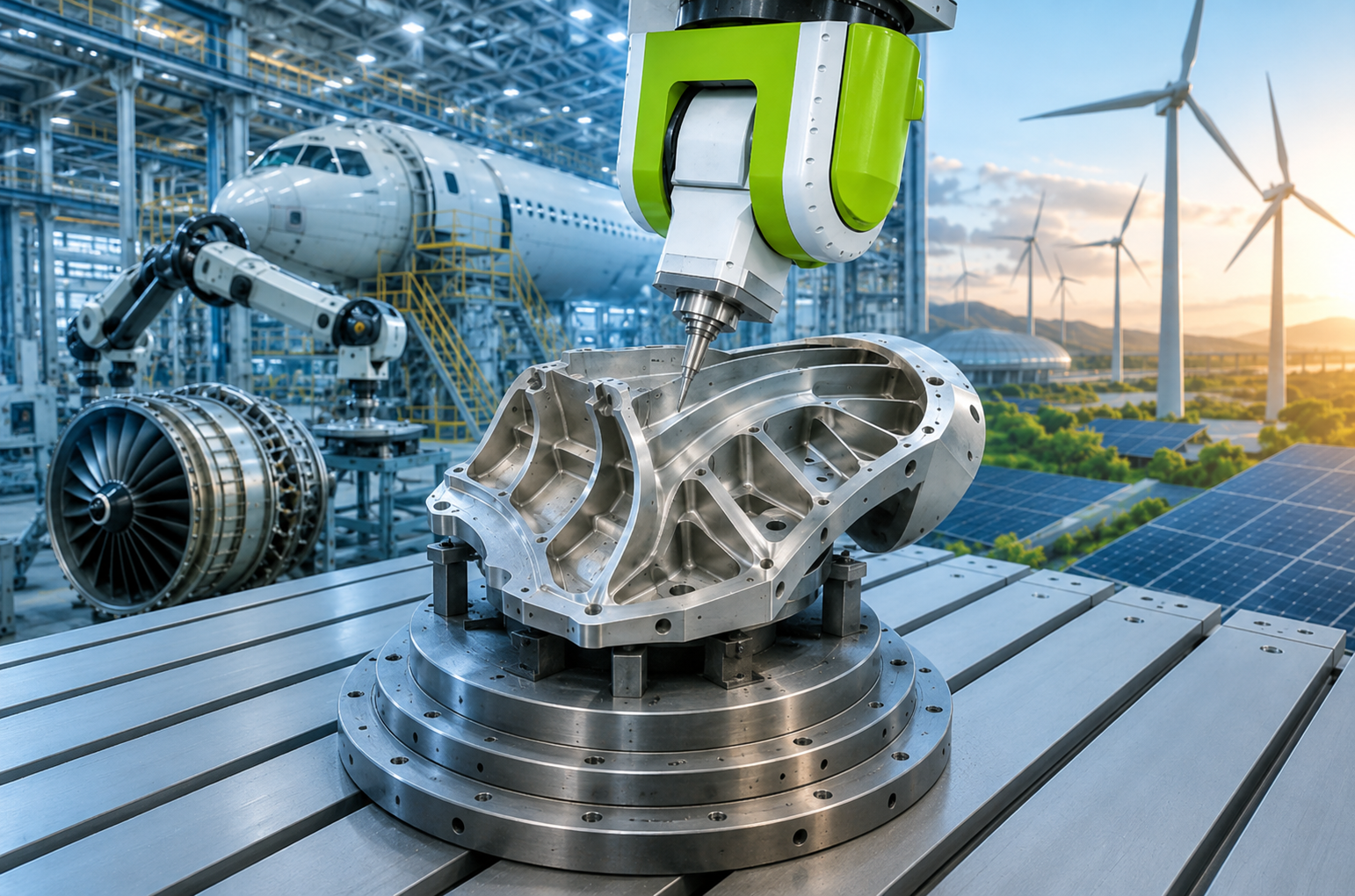
Large-Part Machining Challenges in Mold, Aerospace, and Energy Industries — and the Advantages of 5-Face Gantry Machining Solutions

In heavy-duty manufacturing and precision machining industries, increasing workpiece dimensions—typically exceeding 3 meters in length and weighing more than 5 tons—significantly increases machining complexity. As component size grows, manufacturers often face several critical technical challenges:


1. Excessive Non-Cutting Time and Cumulative Errors Caused by Repeated Setups


Production Challenge

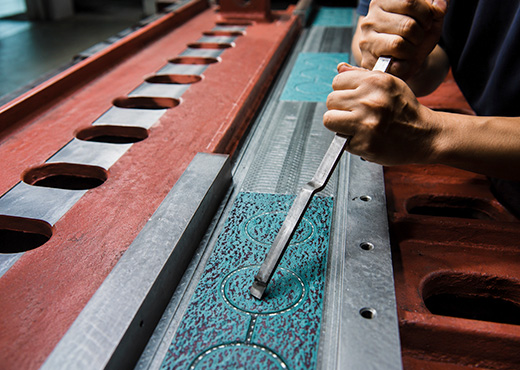
When machining deep cavities in large molds or complex multi-sided aerospace components, conventional 3-axis and standard 4-axis machines often require multiple repositioning and reclamping operations. These repeated setups rely heavily on manual intervention and consume valuable production time.


Technical Impact

Every setup introduces a new reference alignment, creating the potential for positioning errors. Even with precision edge finders and calibration tools, cumulative deviations cannot be completely eliminated. In addition, aligning and indicating large workpieces can take several hours, leaving the machine idle and significantly reducing overall spindle utilization and productivity.


2. Insufficient Dynamic Rigidity During Extended Heavy-Duty Machining


Production Challenge

Large castings, forgings, and hardened materials such as P20 and H13 tool steels generate substantial cutting forces during high-material-removal operations.


Technical Impact

If the machine structure lacks sufficient rigidity, cutting chatter may occur. Chatter not only compromises surface finish quality by creating visible vibration marks, but also accelerates tool wear, causes edge chipping, and increases fatigue on spindle bearings, ultimately reducing machining efficiency and equipment lifespan.


3. Thermal Displacement Leading to Accuracy Drift


Production Challenge

Large-part machining projects often require continuous operation over multiple shifts and extended machining cycles lasting dozens of hours.


Technical Impact

Heat generated by spindle rotation, cutting processes, servo motors, and ambient temperature fluctuations can cause non-linear thermal expansion throughout the machine structure. For workpieces measuring several meters in length, even a small temperature variation can result in dimensional changes of several tens of microns, potentially pushing critical features beyond tolerance requirements.


4. Skilled Labor Shortages and the Limitations of Manual Attachment Head Changes


Production Challenge

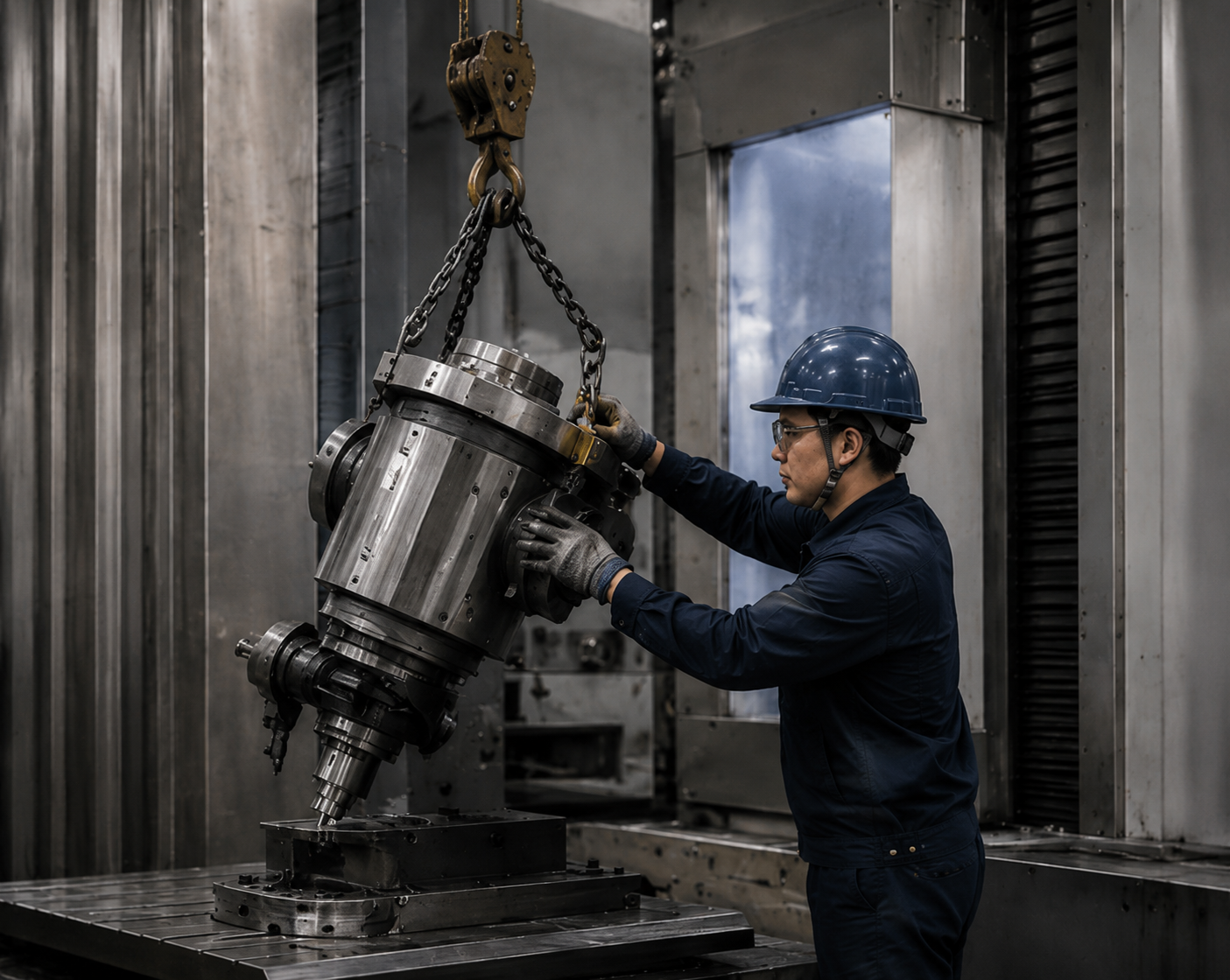
Traditional gantry machining centers typically require experienced operators to manually lift, install, and align various attachment heads whenever different machining angles are needed.


Technical Impact

Manual head replacement is time-consuming, labor-intensive, and potentially hazardous. In addition, variations in tightening force during manual installation can negatively affect machining rigidity and accuracy. As skilled labor becomes increasingly difficult to recruit and labor costs continue to rise, this conventional approach is becoming a major obstacle to productivity growth and manufacturing scalability.
test

The Evolution of Modern Large-Part Machining Solutions

To address these challenges, next-generation gantry machining centers are evolving toward deeper integration of process consolidation and automation.


The combination of 5-face machining technology and Automatic Attachment Changer (AAC) systems enables multiple machining operations to be completed in a single setup. Through automatic attachment head exchange, manufacturers can achieve unattended multi-angle machining while maintaining a single workpiece reference throughout the process.


At the same time, machine structures have been significantly optimized through high-rigidity gantry designs, oversized columns, and reinforced guideway configurations. These advancements effectively suppress vibration, improve dynamic accuracy, and deliver superior machining quality while maximizing productivity.

test

Technical Case Study: The Hartford HSA-546AAC 5-Face Machining Solution

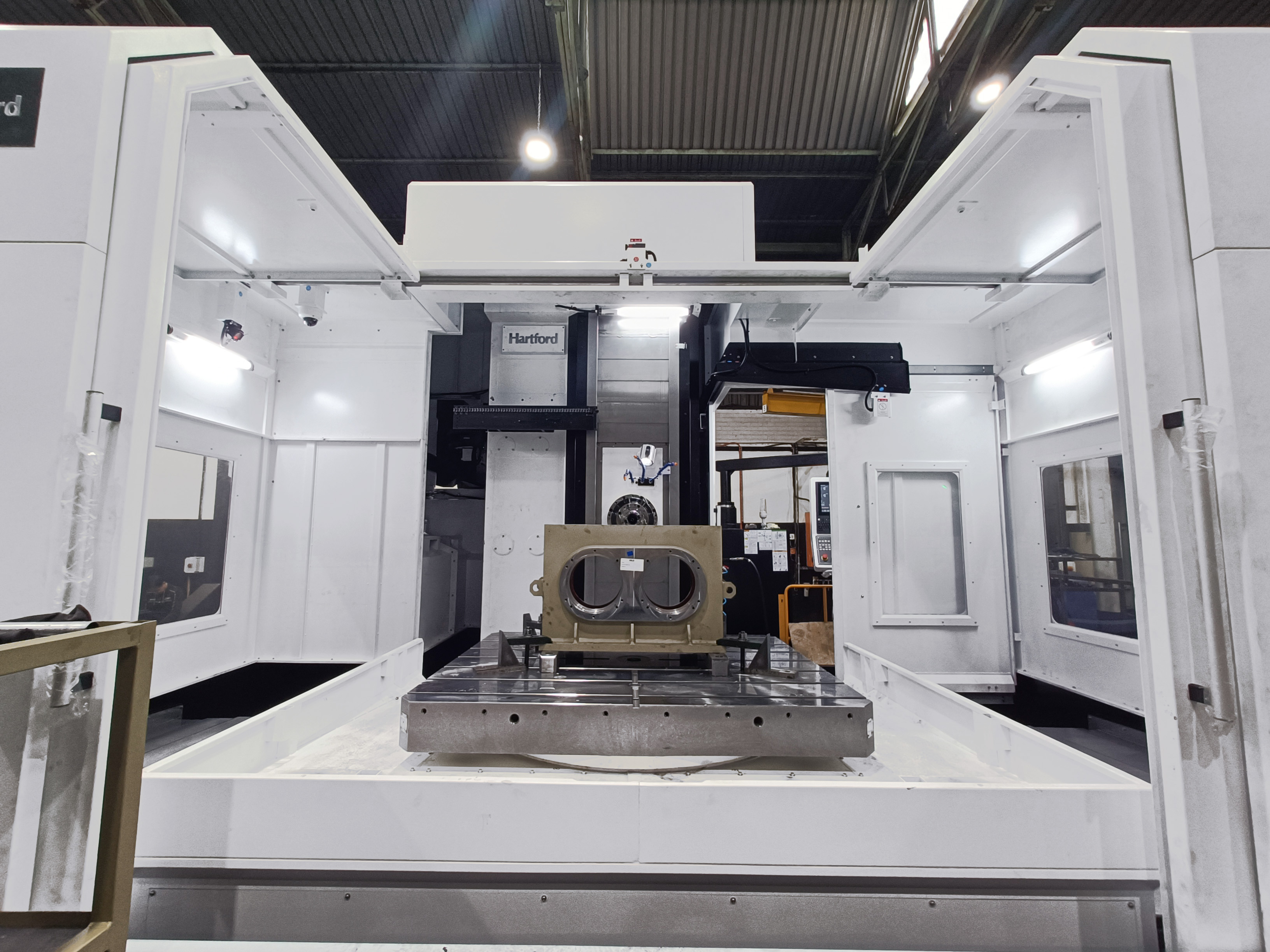
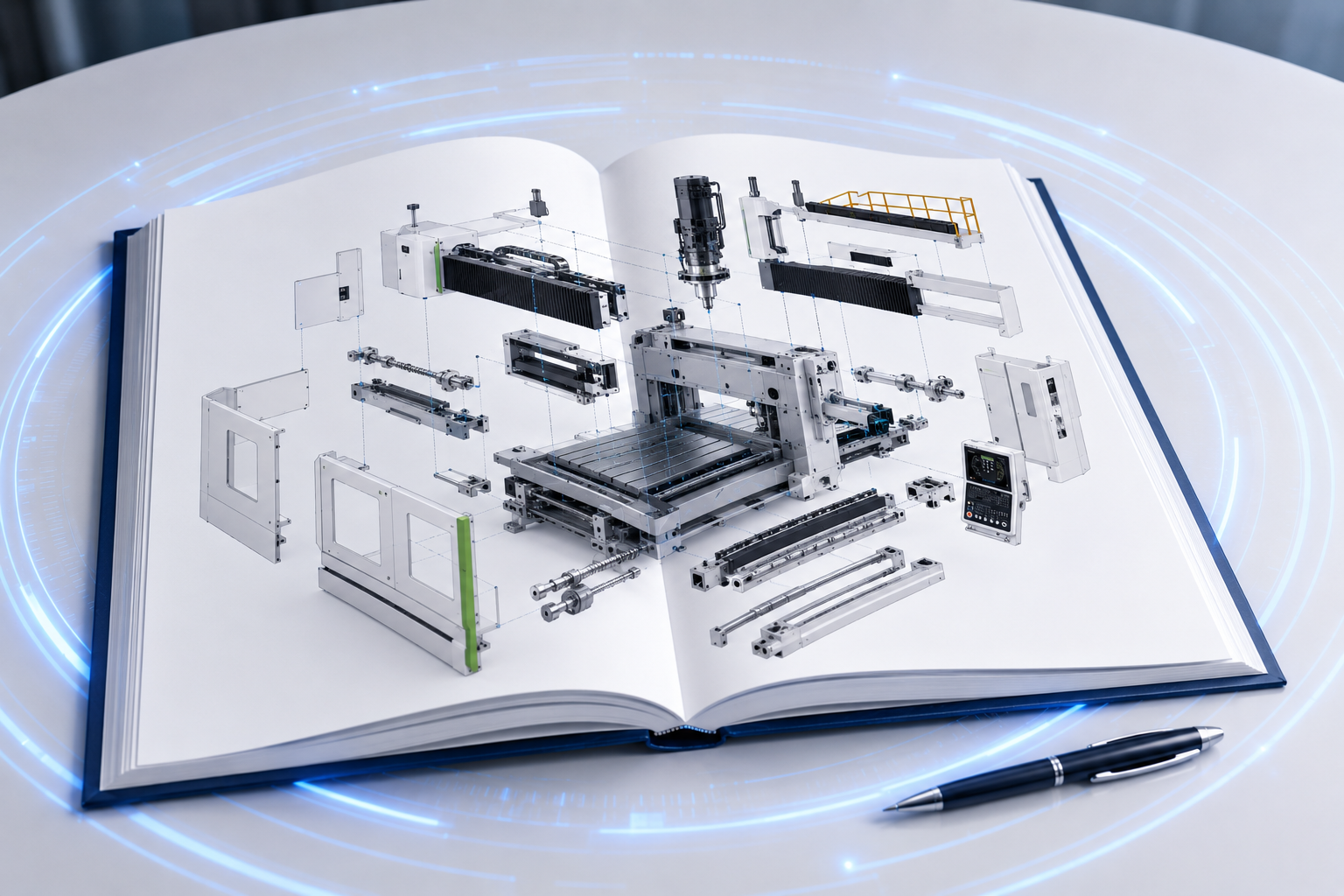
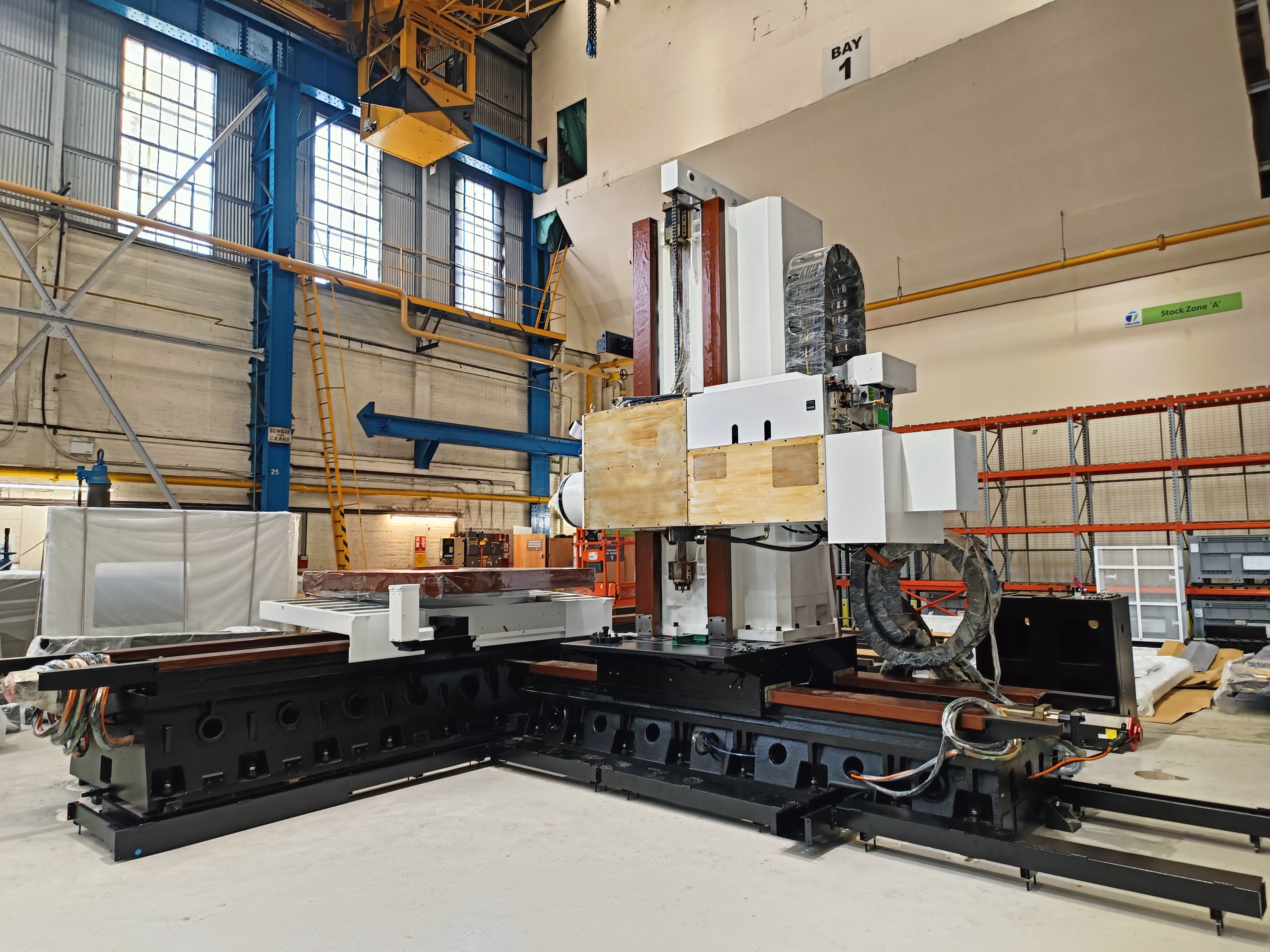
To address the growing demands of large-part precision manufacturing, Hartford developed the HSA-546AAC 5-Face Double Column Machining Center. Designed for heavy-duty machining applications, the machine integrates advanced structural engineering, automated attachment-changing technology, and energy-efficient drive systems to maximize productivity, accuracy, and reliability.


1. High-Rigidity Structural Design


Reinforced Slant-Beam Construction

Compared with conventional gantry structures, the reinforced slant-beam design increases overall structural rigidity by approximately 30%. This enhanced rigidity effectively absorbs cutting forces generated during heavy machining operations, helping maintain geometric stability and machining accuracy throughout extended production cycles.


Four-Guideway Z-Axis Support System

Instead of a conventional dual-guideway configuration, the HSA-546AAC utilizes a four-guideway Z-axis design. This significantly improves load-carrying capacity, increases resistance to lateral cutting forces, and enhances overall structural stability during heavy-duty machining.


2. AAC Automatic Attachment Changer System


Versatile Attachment Head Capability

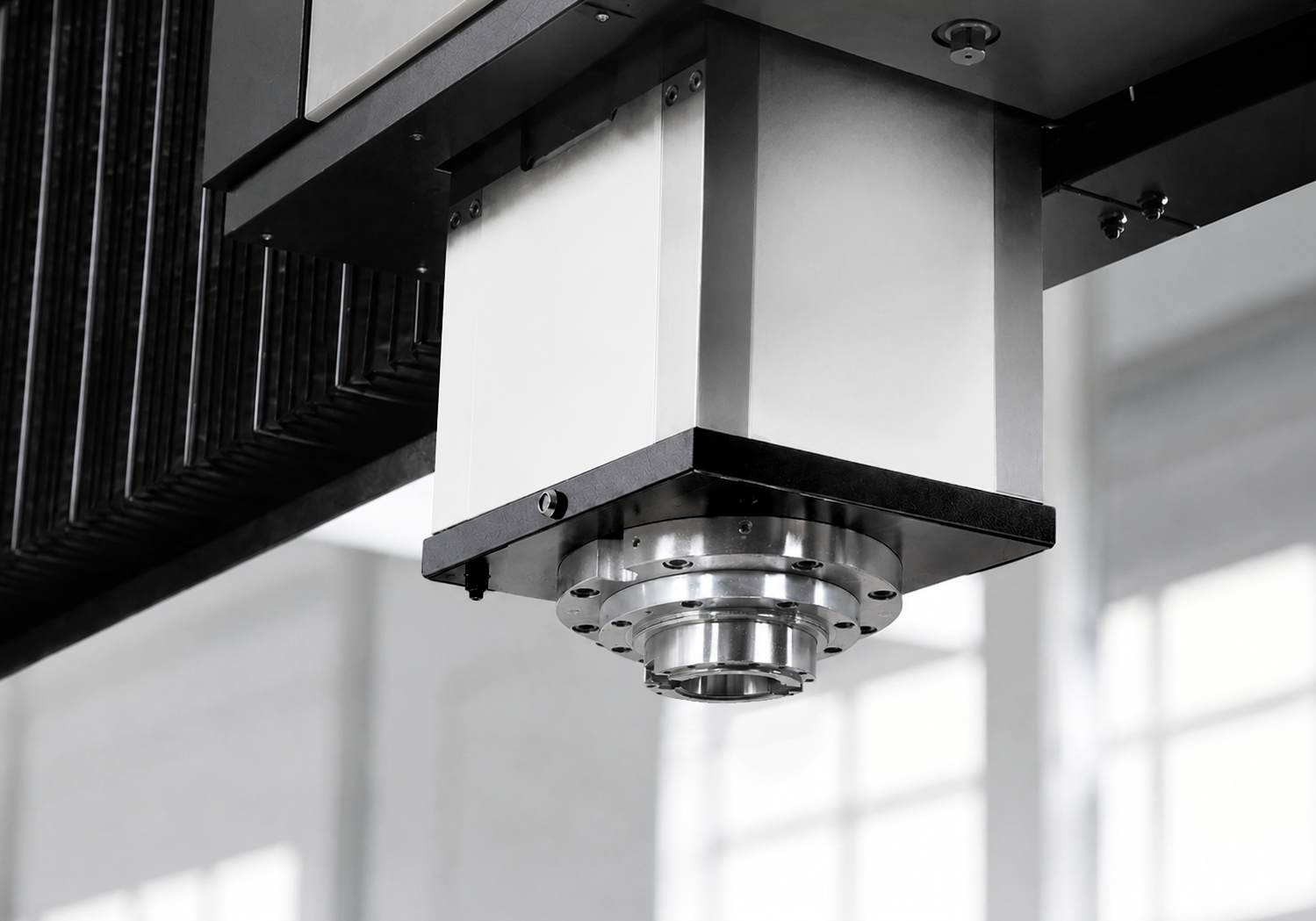
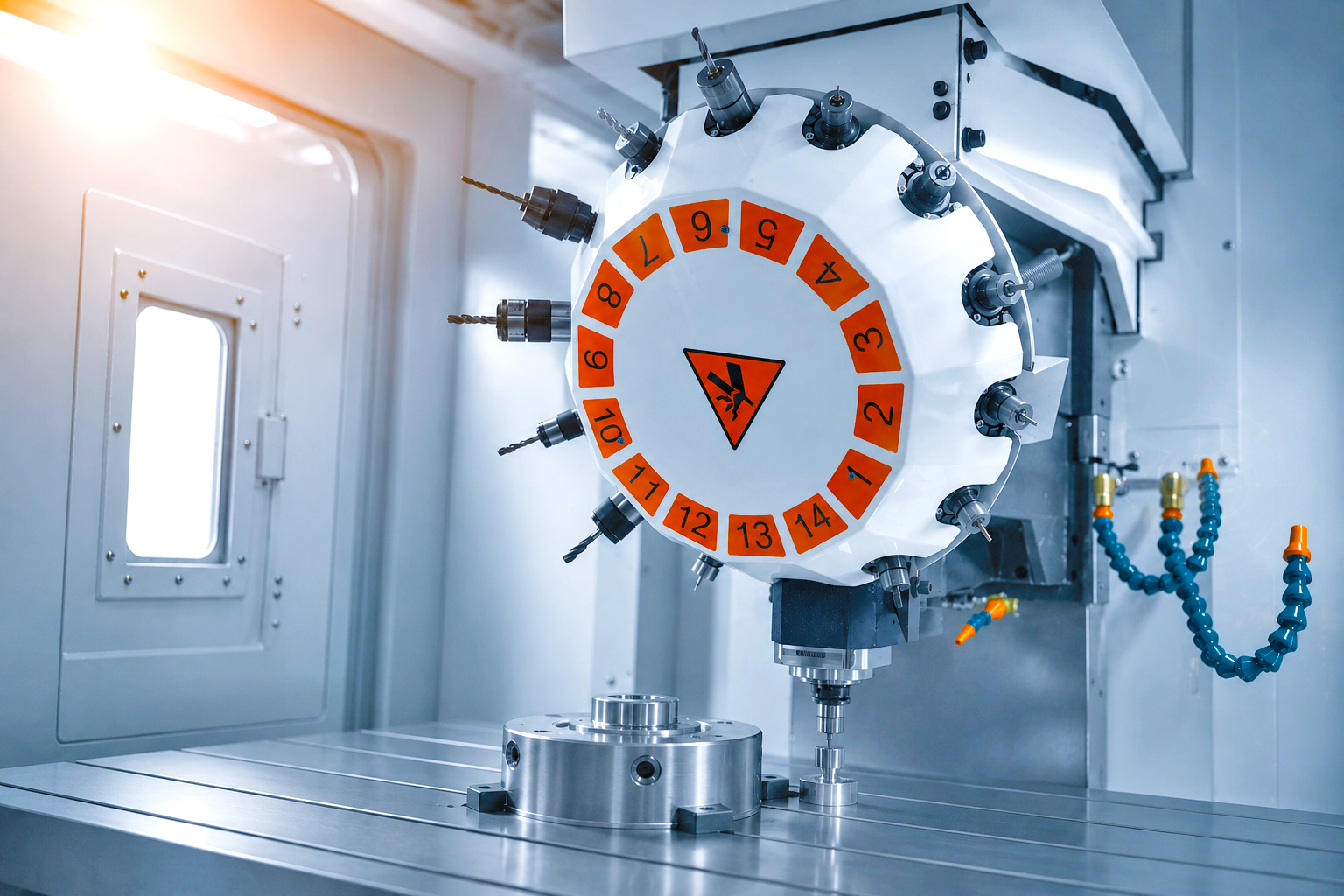
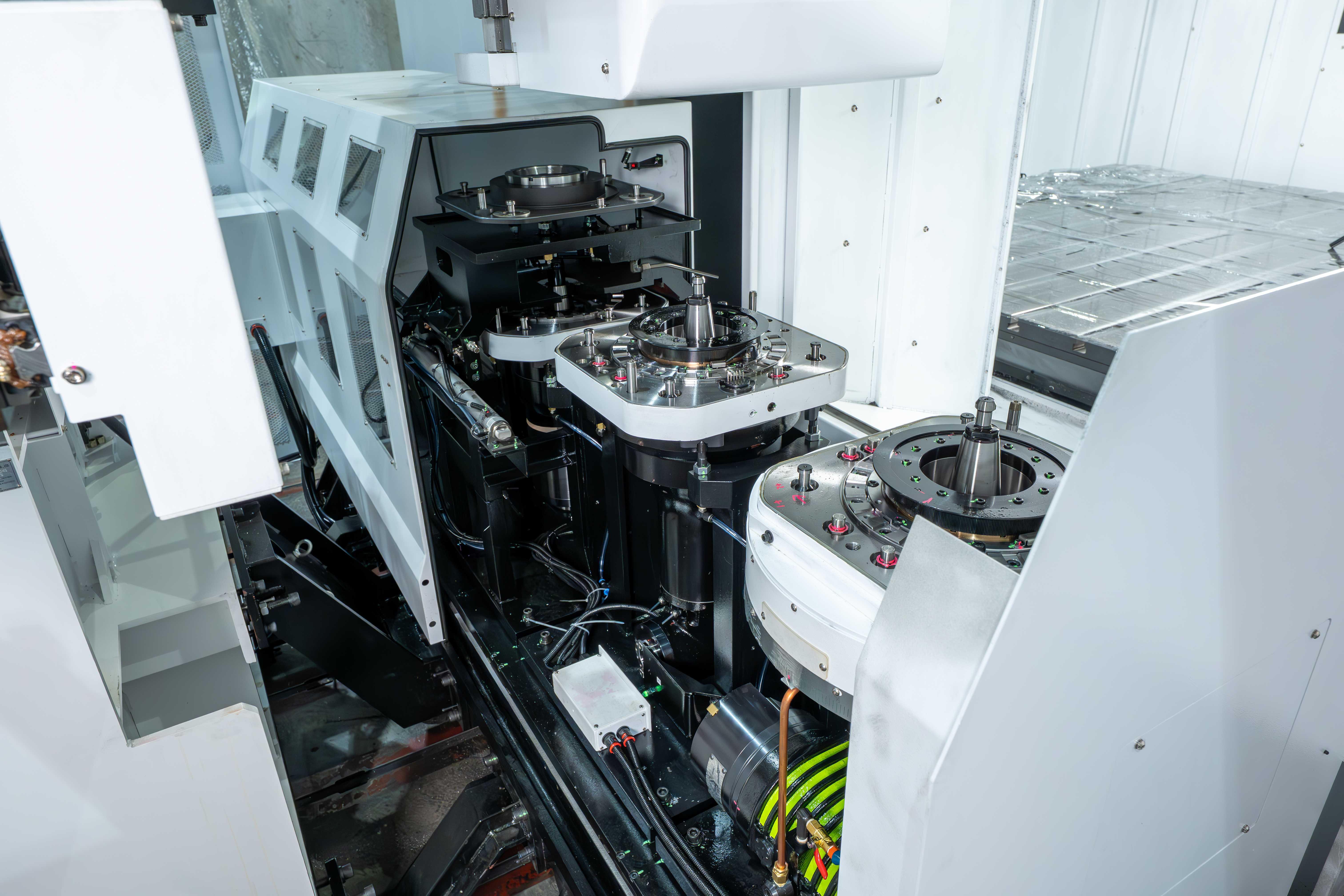
The AAC (Automatic Attachment Changer) system automatically exchanges a variety of machining heads, including:

  • Automatic Universal Head
  • Automatic 90-Degree Angle Head
  • Automatic Extension Head

This capability enables efficient machining of deep cavities, complex geometries, and multi-angle features without manual intervention, greatly improving productivity and process flexibility.


Independent Multi-Head Storage Protection

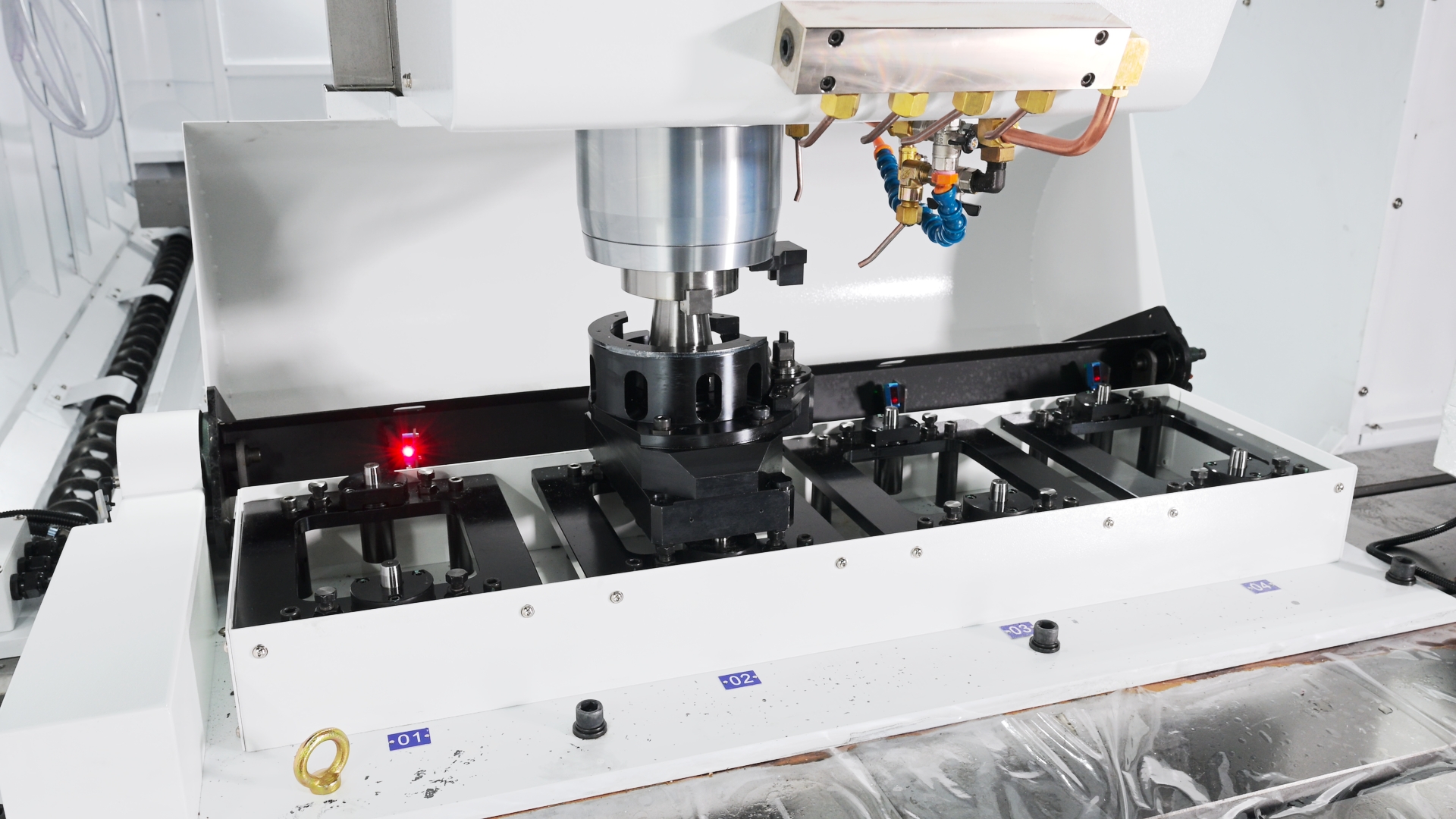
The system supports storage for up to 3 to 5 attachment heads within dedicated storage stations equipped with independent protective doors. This design effectively shields precision attachment heads from chips, coolant contamination, and environmental exposure, helping extend service life and maintain long-term machining accuracy.


3. High-Efficiency Drive System and Energy-Saving Design


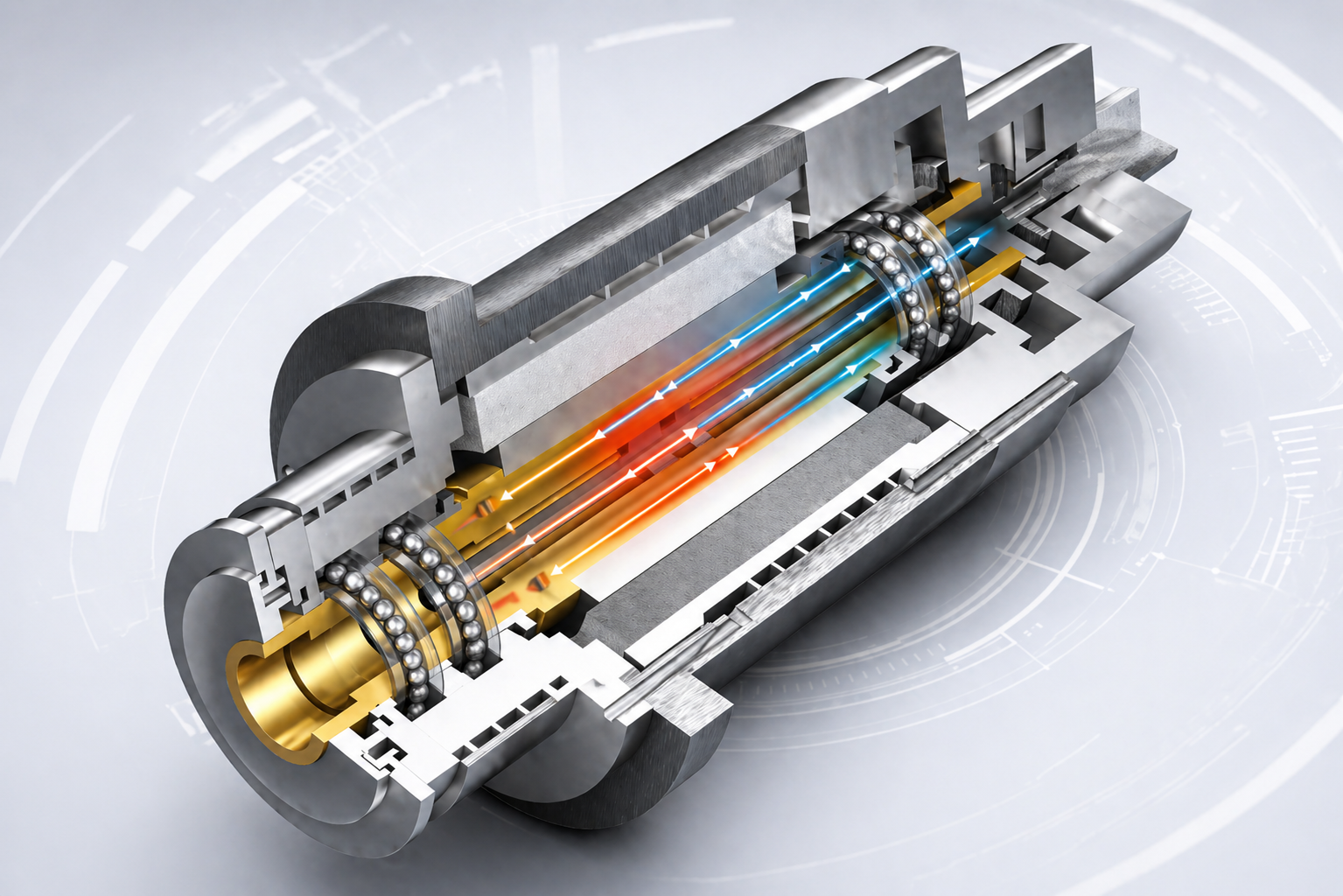
Hartford Gear-Driven Spindle

The self-developed gear-driven spindle delivers high torque output, making it ideal for heavy cutting applications involving hardened materials, cast steel components, and large structural workpieces.


Direct-Drive Servo Technology on All Three Axes

All three axes are equipped with direct-drive servo systems, eliminating backlash commonly associated with belts and couplings. This improves positioning accuracy, enhances dynamic response, and ensures superior full closed-loop control performance.


Nitrogen Counterbalance System

The Z-axis adopts a nitrogen counterbalance system instead of a conventional hydraulic balancing mechanism. This design significantly reduces motor loading and energy consumption while improving motion efficiency and lowering overall operating costs.

test

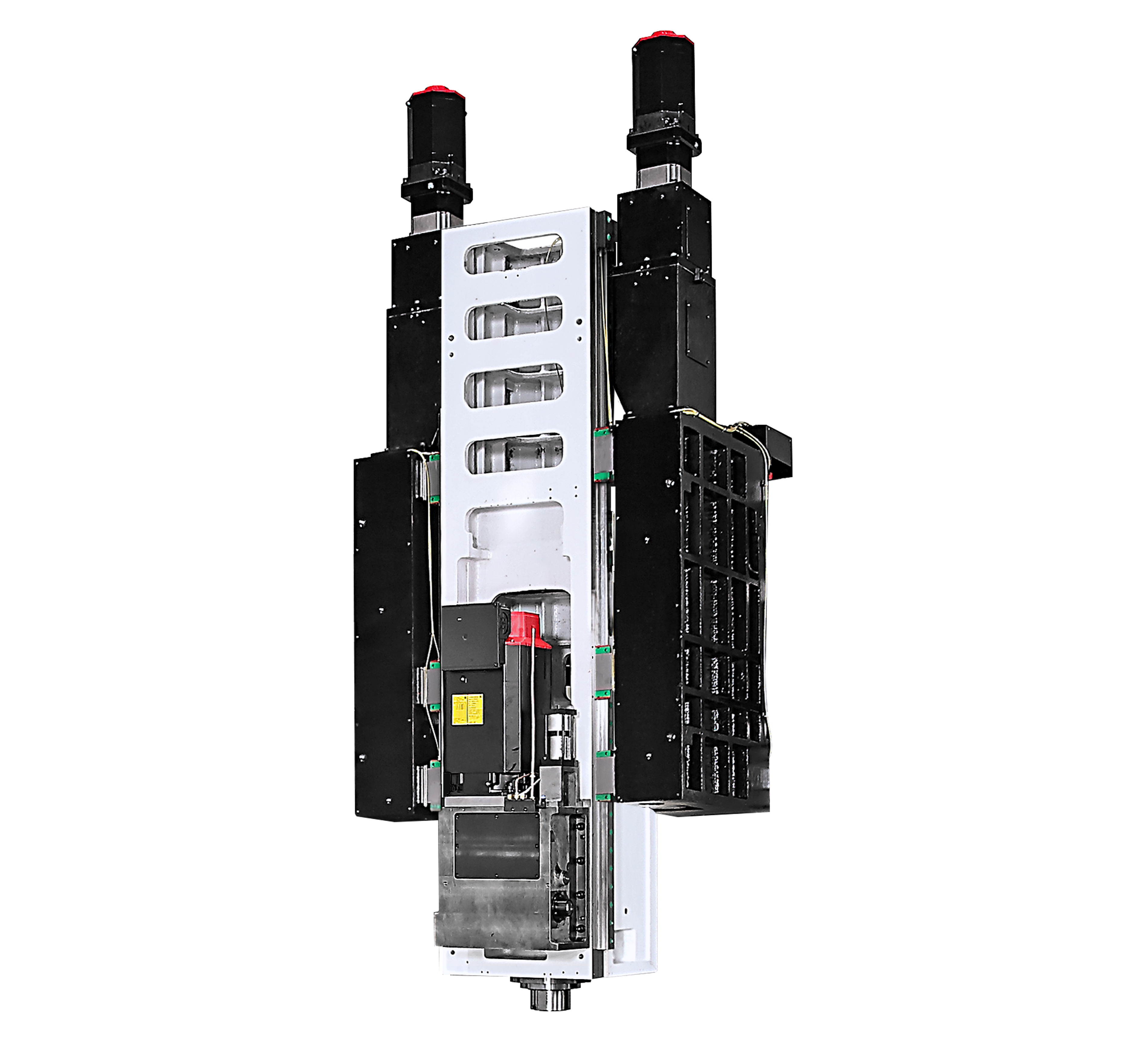
Dual ballscrew Z-axis design (Optional)

test

Box-way Z-axis design (Optional)

test

Triple linear guideway Y-axis design (Optional)

Engineered for Extreme Heavy-Duty Cutting: Advanced Optional Technologies for the HSA-546AAC

When machining large industrial components, hardened tool steels such as H13 and P20, or aerospace-grade titanium alloys, machine rigidity and dynamic responsiveness become critical factors that directly influence machining quality and productivity.


To overcome the physical limitations commonly associated with traditional long-travel, heavy-duty gantry machines, the Hartford HSA-546AAC offers three advanced optional technologies specifically designed to enhance machine performance from three key perspectives: drive, guidance, and structural support.


1. Dual Ballscrew Z-Axis Drive (Optional)


Overcoming Deflection and Long-Stroke Deformation

Traditional gantry machine rams are typically driven by a single ballscrew. When the ram extends over a long distance or carries a heavy attachment head, asymmetric loading can create slight angular deflection and geometric distortion.

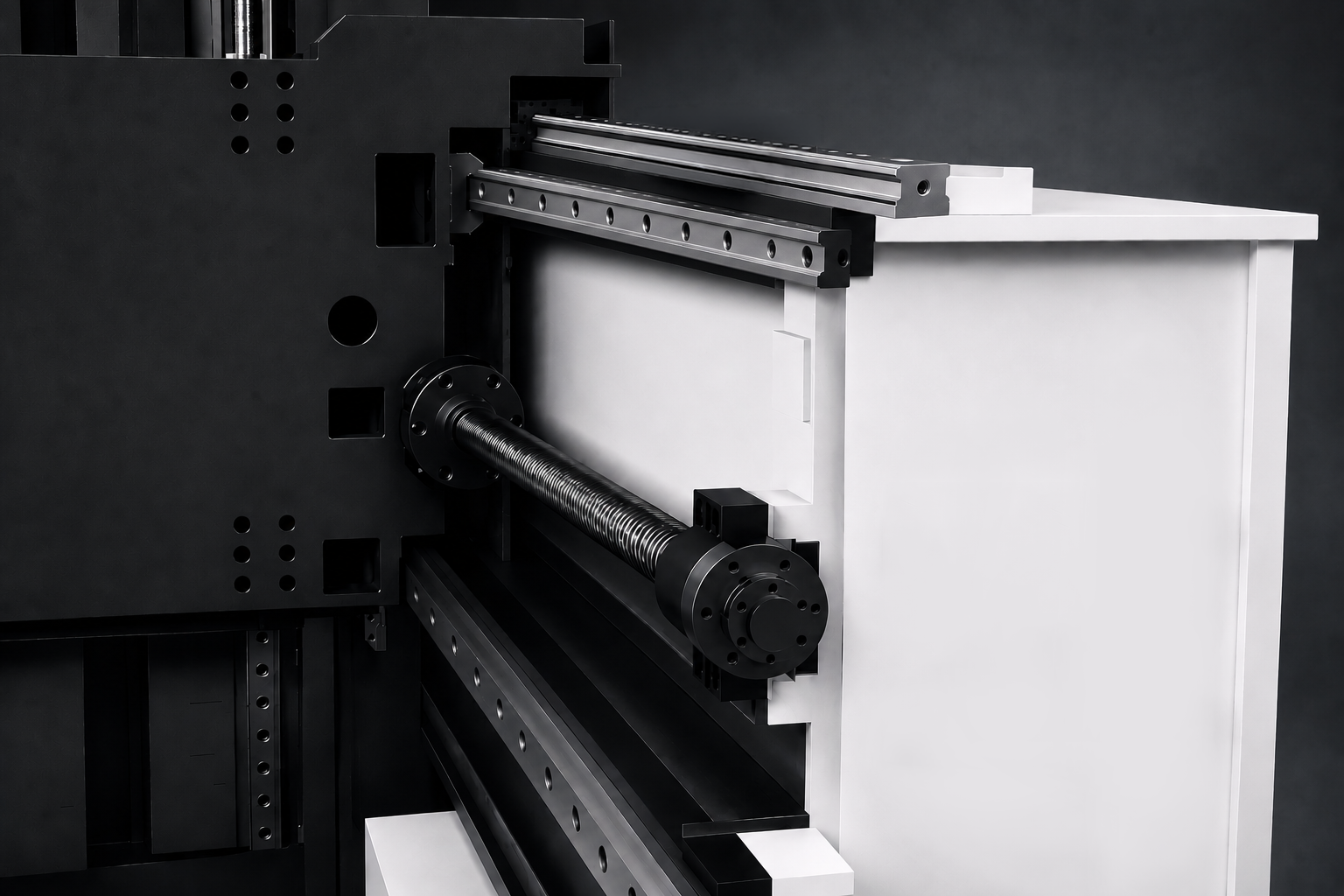
The HSA-546AAC offers an optional Dual Ballscrew Z-Axis Design that utilizes two precision ballscrews operating in perfect synchronization. This configuration significantly increases drive rigidity, enhances vertical load support, and minimizes geometric deformation caused by long travel distances and cutting reaction forces.

Whether performing deep-cavity machining or high-speed reciprocating movements, the dual ballscrew system delivers exceptional dynamic tracking accuracy and outstanding stability during heavy-duty cutting operations.


2. Box-Way Z-Axis Design with Fully Enclosed 8-Way Support Structure (Optional)


Maximum Damping and Structural Rigidity

Interrupted cutting applications, such as rough machining of large castings or welded structures, generate substantial impact loads that place extreme demands on machine rigidity.

To address these challenges, the HSA-546AAC can be equipped with an optional Box-Way Z-Axis Design featuring a fully enclosed ram structure supported by eight sliding guide surfaces surrounding the ram. This comprehensive support arrangement provides exceptional rigidity from all directions.

Compared with conventional linear guideways, box ways offer superior contact stiffness and natural damping characteristics. The result is outstanding vibration absorption, enhanced resistance to bending forces, and significantly improved cutting stability.

This configuration effectively suppresses cutting chatter while maintaining high material removal rates, delivering superior surface finish quality and extending the service life of cutting tools during demanding machining applications.


3. Triple Linear Guideway Y-Axis Design (Optional)


Ensuring Crossbeam Stability Across the Entire Travel Range

The crossbeam is one of the most critical load-bearing structures in a gantry machining center. As the spindle and attachment heads move toward the center of the beam, conventional dual-guideway configurations may experience slight deflection due to concentrated loading.

The optional Triple Linear Guideway Y-Axis Design introduces a third high-rigidity guideway to distribute loads more evenly across the beam structure. This significantly enhances geometric stability and minimizes structural deformation throughout the entire travel range.

Regardless of spindle position, the triple-guideway configuration helps maintain superior straightness and positioning accuracy, ensuring optimal machining precision and dynamic performance under varying load conditions.


Application Benefits and Configuration Flexibility

These three optional technologies are not intended to operate independently. Instead, they can be combined strategically according to specific application requirements.

For aerospace structural components and other high-precision applications, the combination of the Dual Ballscrew Z-Axis and Triple Linear Guideway Y-Axis provides exceptional geometric accuracy throughout the entire machining envelope.

For large forging dies, heavy castings, and aggressive roughing operations, the combination of the Box-Way Z-Axis and Dual Ballscrew Drive delivers superior rigidity and vibration resistance, enabling maximum material removal performance.

Through this flexible configuration matrix, the HSA-546AAC allows manufacturers to achieve the optimal balance between machining efficiency, geometric accuracy, and extreme heavy-duty cutting capability, ensuring outstanding performance across a wide range of demanding applications.

Conclusion

The Hartford HSA-546AAC is more than just a machine tool—it is a comprehensive automated manufacturing solution specifically designed for the demands of large-scale precision machining.


By integrating three core technologies—a high-rigidity slant-beam structure, a four-guideway Z-axis design, and the AAC (Automatic Attachment Changer) system—the HSA-546AAC effectively addresses key industry challenges such as repeated setup operations, thermal accuracy drift, and dependence on skilled labor.


For manufacturers in the aerospace, mold-making, energy, and heavy-equipment industries, the HSA-546AAC enables greater machining efficiency, improved process consistency, and enhanced operational flexibility. At the same time, its energy-efficient design supports sustainable manufacturing initiatives while helping companies achieve higher machine utilization, shorter lead times, and stronger long-term competitiveness.

Learn More
Other News
news

Next-Generation Precision Manufacturing Solution for High-Volume Production

Hartford Launches the SMC-7 Next-Generation High-Speed Drilling and Tapping Machining Center

05.292026
MORE

How Can Large Workpieces Solve Multi-Angle Machining and Labor Shortage Challenges?

Gantry machining center series automatic tool-type angle head changer system

05.182026
MORE

Hartford PBM-135 Successfully Delivered in the UK

Deepening Our Presence in the UK — Hartford PBM-135 Horizontal Boring and Milling Machine Successfully Delivered to a UK Customer

05.152026
MORE

Hartford Integrates Taiwan's Precision Cooling Tech

Smart Machinery: A Revolution from the Core—Leading EV, Aerospace, and Precision Tooling to the Global Stage

04.302026
MORE

DX × GX Driving Precision Machining in Europe

Hartford Completes Strategic Market Expansion in Poland

04.272026
MORE

Application Results from Meximold Exhibition

Through the exhibition platform, UPTECH successfully conveyed Hartford’s strengths in mold machining to the Mexican market.

04.222026
MORE

Key Technologies in Aerospace, Semiconductor, and EV Machining

An In-Depth Look at the Importance of Tool Center Point (TCP) in 5-Axis Machining

04.132026
MORE

What Is Micro-Stability Concept?

Why High-Precision CNC Machining Can No Longer Rely on Single-Axis Accuracy Alone?

04.072026
MORE

TMTS 2026 Successfully Concludes

Thank You to Our Global Customers, Partners, and Academic Visitors for Visiting Hartford

03.312026
MORE

Vietnamese Delegation and Indian Buyer Visit Hartford Factory During TMTS

A Closer Look at CNC Machining Applications, Smart Manufacturing, and Equipment Utilization Management

03.272026
MORE

Hartford Highlights Semiconductor and Micro-Machining at TMTS 2026

Thanks to major media for their coverage.(Economic Daily News, Commercial Times, China Times News, Yahoo News)

03.252026
MORE

How to Solve Chip Wrapping in Drilling?

Hartford Chip-Breaking Technology Delivers High Cost-Performance CNC Machining

03.232026
MORE

Solving Dust Issues in Graphite and Mining with CNC Machines ?

03.202026
MORE

5-Axis CNC Machining for Semiconductor Vacuum Chambers

Hartford 5A-65E Micron-Level Precision Test

03.092026
MORE

TMTS 2026 Pre-Show Highlights

Smart Manufacturing × Sustainable Transformation

03.022026
MORE

A Strong Start to the Year of the Horse

2026 Hartford New Year Opening Highlights

02.232026
MORE

Clarification on Unauthorized Activities in the Russian Market

02.032026
MORE

Horizontal Boring Mill PBM-135C has completed inspection and shipment【UK】

Hartford’s Precision Machining Capability Earns International Recognition

01.092026
MORE

Power Dad’s On-Site Visit Highlights

Hartford Gantry Machining Centers Showcase the Strength of Taiwan Manufacturing

12.232025
MORE

Hartford Resolves Czech Machining Challenges

Cross-Border Support Success

12.092025
MORE